Business Septic Tank Siphoning is an important part of maintaining a commercial property that depends on a septic system. Because septic tanks are usually underground and out of sight, it is easy for business owners and property managers to forget about them until something goes wrong. Unfortunately, wastewater problems rarely appear at a convenient time. A slow-draining restroom, persistent sewage odor, wastewater backup, or overflowing septic tank can quickly turn an ordinary business day into an operational headache.
Commercial properties can also place considerable demands on septic systems. Offices, restaurants, warehouses, schools, clinics, lodging establishments, and other businesses may have employees, customers, and visitors using their facilities throughout the day. As wastewater enters the septic tank, solids gradually accumulate. Without appropriate maintenance, that buildup can reduce the tank’s usable capacity and contribute to drainage and wastewater problems.
Regular professional siphoning provides businesses with a practical way to manage accumulated waste before it becomes a more serious disruption. The Malabanan Siphoning team provides septic tank siphoning and related wastewater services for homes and businesses across Metro Manila and nearby provinces. The company also offers assessments and transparent quotations before work begins, helping property owners understand the service before proceeding.
Why Business Septic Tank Siphoning Matters
A septic tank is designed to receive and manage wastewater, but it is not an unlimited storage container. Wastewater enters the tank while heavier solids settle and accumulate. Over time, that material takes up space that would otherwise be available for incoming wastewater. If the accumulated solids are not removed when necessary, the system may eventually struggle to function as intended.
This is where Business Septic Tank Siphoning becomes an important part of commercial property maintenance. Rather than waiting until wastewater backs up into a restroom or spills onto a property, businesses can incorporate septic maintenance into their broader facility-management routine.
The consequences of neglect can be particularly disruptive in a commercial setting. Imagine a restaurant discovering a wastewater backup just before its busiest lunch period. An office may suddenly have unusable restrooms. A school or other busy facility may have to restrict access to affected areas. These situations are not only inconvenient; they can interfere with normal operations and require urgent attention.
The U.S. Environmental Protection Agency’s septic system resources explain the importance of regular septic system care and maintenance. While the appropriate maintenance schedule differs between properties, the principle applies broadly: septic systems need to be monitored and maintained rather than forgotten simply because their components are underground.
For business owners, regular siphoning is therefore not merely another maintenance expense. It is part of keeping an essential piece of property infrastructure functional.
How Commercial Septic Tanks Work
Understanding the basic role of a septic tank makes it easier to understand why maintenance matters. A typical septic system receives wastewater from a property and directs it into a tank. Inside the tank, heavier solids settle toward the bottom while lighter materials may rise toward the surface. The liquid portion then moves onward through the system according to its design.
The tank therefore acts as an important part of the property’s wastewater-management process. However, the solid material that settles inside the tank does not simply disappear. It accumulates over time and eventually needs to be removed through professional pumping or siphoning.
Commercial systems can experience substantially different wastewater volumes depending on the type and size of the business. A small office with limited occupancy may have very different requirements from a restaurant, school, or large commercial facility.
That is why businesses should avoid assuming that every septic tank requires the same maintenance schedule. The number of people using the facilities, operating hours, tank size, wastewater characteristics, and system design can all affect maintenance needs.
The U.S. EPA explains the basic components and operation of septic systems, including the role of the septic tank and the treatment of wastewater. Understanding these fundamentals helps property managers recognize why a tank that appears to be working normally can still require periodic professional service.
The simplest way to think about a septic tank is like a storage and treatment checkpoint. Wastewater continually arrives, but accumulated solids remain behind. If those solids are never removed, eventually the system has less room to perform its job.
Signs Your Business Needs Septic Tank Siphoning
One of the biggest challenges with septic maintenance is recognizing when service is needed. The tank itself may be hidden underground, but the building often provides warning signs when the wastewater system is experiencing difficulty.
One common sign is slow drainage throughout the property. If several sinks, toilets, floor drains, or other fixtures begin draining more slowly than usual, the problem should not automatically be dismissed as an ordinary clog. A single slow drain may have a localized cause, but widespread drainage changes can point toward a larger wastewater issue.
Persistent sewage odors are another reason to investigate. If employees or customers notice wastewater smells around restrooms, drains, or areas associated with the septic system, the business should consider having the system professionally assessed.
Toilet problems can also provide useful clues. Repeated backups, slow flushing, unusual bubbling, or wastewater appearing where it should not are all reasons to seek professional assistance.
Standing wastewater around a septic area is more serious. So is wastewater backing up into a building. Businesses should respond quickly rather than waiting for the situation to resolve on its own.
The Centers for Disease Control and Prevention provides information about septic systems and sanitation, reinforcing the importance of properly maintained septic infrastructure.
Not every warning sign automatically means that a septic tank is full. Pipes, drainage components, and other parts of the system can also develop problems. That is why professional assessment matters. The goal is to identify the actual cause instead of repeatedly treating symptoms without addressing the underlying issue.
How Often Should a Business Septic Tank Be Siphoned?
There is no universal answer to the question of how often a business should schedule septic tank siphoning. Commercial properties vary too much for a single timetable to work everywhere.
Consider two businesses occupying similar-sized buildings. One may have a small number of employees and relatively low daily wastewater usage. The other may have substantially more employees, customers, longer operating hours, and more frequent restroom use. Their septic systems could therefore accumulate solids at very different rates.
A practical maintenance schedule should consider tank capacity, wastewater volume, occupancy, business type, system design, and previous service history. Keeping records of past siphoning appointments can help property managers identify patterns over time.
Businesses should also reconsider their maintenance approach after significant changes. If a company expands its workforce, adds operating hours, renovates its facilities, or increases the number of people using its restrooms, its previous septic schedule may no longer be appropriate.
Professional assessment can provide additional guidance. Instead of guessing whether the tank needs service, property managers can have the system evaluated and discuss a maintenance approach based on the property’s actual circumstances.
Regular service does not mean siphoning a tank unnecessarily often. The objective is to remove accumulated material when appropriate and avoid allowing the tank to become overloaded.
This is similar to maintaining other commercial infrastructure. A business does not wait for an air-conditioning system to fail completely before considering maintenance. Likewise, wastewater infrastructure deserves attention before a preventable problem interrupts operations.
What Happens During Professional Septic Tank Siphoning
Professional septic tank siphoning involves specialized equipment designed to extract wastewater and accumulated solids from the tank. The exact process can vary depending on the tank, access point, property layout, and condition of the system.
Before the work begins, the service provider needs to identify the tank and determine how equipment can safely reach it. Commercial properties can sometimes present access challenges because tanks may be located behind buildings, under paved areas, near parking spaces, or in other restricted locations.
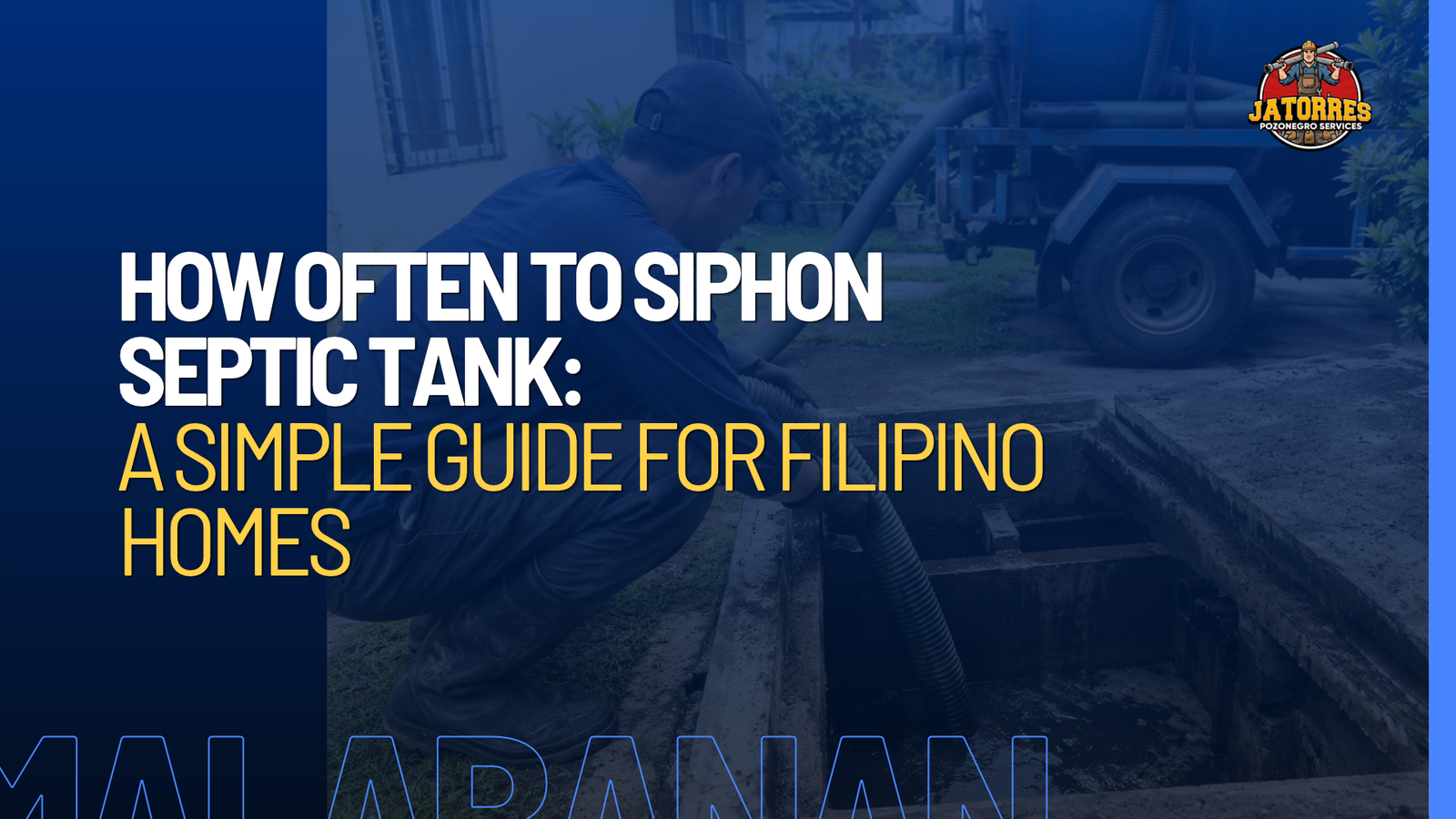
Once access has been established, specialized siphoning equipment is used to remove the contents of the tank. Professional equipment helps technicians perform the work more efficiently and reduces the need for property owners or employees to handle wastewater directly.
Businesses should provide the service team with useful information before the appointment. If the property has experienced repeated backups, unusual odors, slow drainage, or other problems, those details can help technicians understand the situation.
A professional visit may also provide an opportunity to discuss the property’s broader maintenance needs. If the same problem keeps returning shortly after service, there may be another issue requiring investigation.
At Malabanan Siphoning’s services page, businesses can learn about the company’s available septic and wastewater-related services. JA Torres Malabanan Siphoning provides a free assessment and fixed, transparent quotation before work begins.
For a business owner, that clarity matters. You want to understand what service is being recommended and what you are expected to pay before the work starts.
Benefits of Regular Business Septic Tank Siphoning
Regular septic maintenance can provide several practical benefits to commercial property owners. The first is better control over wastewater-related maintenance. Instead of waiting for a major backup to force an emergency response, businesses can plan service around their operational schedules.
Another benefit is reduced disruption. A wastewater emergency can affect restrooms, work areas, customer spaces, and employee facilities. Planned maintenance can be arranged during a suitable service window, potentially reducing the impact on normal business activities.
Regular siphoning can also support better property management. When service records are maintained, property managers can track previous maintenance and recognize recurring patterns. This information can be useful when planning future service.
There is also a sanitation benefit. Untreated or improperly contained wastewater can create unpleasant and potentially hazardous conditions. The World Health Organization’s sanitation resources discuss the broader importance of safely managed sanitation systems.
Another advantage is peace of mind. Septic infrastructure may not be something business owners think about every day, but knowing that the system is included in a maintenance plan removes some uncertainty.
Regular service does not guarantee that a septic system will never fail. Problems can occur in pipes, drainage components, tanks, and other infrastructure. Still, managing accumulated solids is an important part of responsible septic maintenance.
The best maintenance is often the maintenance nobody notices. When wastewater infrastructure works properly, customers and employees can focus on what brought them to the business in the first place.
Businesses That May Need Septic Tank Siphoning
Any business that relies on a septic system may eventually require professional siphoning. The actual maintenance requirements depend on the property, but some commercial environments can place particularly significant demands on wastewater infrastructure.
Restaurants and food establishments can have high wastewater usage because of restroom activity, cleaning, and other daily operations. These businesses may need careful coordination between septic maintenance and their broader wastewater-management practices.
Office buildings can also depend heavily on functioning septic systems, particularly when many employees share the same facilities throughout the workday.
Schools and training facilities may experience concentrated restroom usage during operating hours. Their wastewater requirements can vary significantly depending on enrollment, staff, schedules, and facility design.
Warehouses and commercial facilities may have different usage patterns but can still experience septic problems when maintenance is overlooked.
Clinics, lodging establishments, and other customer-facing businesses also benefit from reliable wastewater infrastructure because restroom and sanitation problems can immediately affect visitors and staff.
The important point is not the industry label. It is whether the property relies on a septic system and how heavily that system is used.
Business owners should understand their property’s wastewater infrastructure rather than assuming that septic maintenance is someone else’s responsibility. A tank may be underground, but its condition can directly affect what happens inside the building.
How Septic Problems Can Disrupt Business Operations
A septic problem can spread beyond the plumbing system itself. Once wastewater begins backing up or overflowing, the business may need to restrict access to affected areas and arrange emergency service.
Consider a customer-facing establishment. If customers encounter a persistent sewage smell or discover that restrooms are unusable, their experience can change immediately. Employees may also have difficulty carrying out their work if essential facilities are unavailable.
For offices, wastewater problems can create uncomfortable working conditions. For schools and other busy facilities, they can complicate the management of large numbers of people.
There may also be cleanup requirements when wastewater enters occupied areas. Depending on the circumstances, the affected space may need professional cleaning and sanitation.
Financial consequences can follow as well. A business dealing with an emergency has to manage the service cost while potentially dealing with lost time, disrupted operations, and other expenses.
This is why septic maintenance belongs in a broader business continuity and property maintenance plan. Business owners do not need to think about septic tanks every day. They simply need a system for monitoring the infrastructure and arranging appropriate maintenance.
Preventive siphoning cannot eliminate every possible wastewater failure, but it can help address accumulated solids before they become one obvious source of trouble.
The goal is simple: keep essential infrastructure working quietly in the background instead of allowing it to become the reason normal business operations stop.
Septic Tank Siphoning vs. Drain Declogging
Septic tank siphoning and drain declogging are related to wastewater management, but they are not the same service. Understanding the distinction can help business owners choose the appropriate response when a plumbing problem appears.
Drain declogging generally addresses a blockage within a pipe or drain. A localized blockage may occur because of accumulated material inside a particular section of the plumbing system.
Septic tank siphoning, on the other hand, involves removing accumulated contents from the septic tank itself. It addresses the tank’s accumulated wastewater and solids rather than simply clearing one blocked pipe.
A business may occasionally need both services. For example, a property could experience a clogged drain while also requiring routine septic maintenance. Treating one problem does not automatically solve the other.
This distinction is particularly important when a business experiences recurring symptoms. If a drain is cleared but similar problems keep returning throughout the property, management may need to investigate the broader wastewater system rather than repeatedly addressing one fixture.
Professional assessment can help determine which service is appropriate.
Malabanan Siphoning provides both septic tank siphoning and pipe declogging and manual drain cleaning services. Businesses can discuss their symptoms with the service team so the appropriate solution can be identified.
Instead of asking only, “How do we unblock this drain?” a property manager should sometimes ask, “Why does this keep happening?” That second question can lead to a more useful long-term solution.
How to Prepare Your Business for Siphoning
Preparation can make a commercial septic service appointment smoother and more efficient. The first step is to make sure the service provider knows where the septic tank is located, if its location is known.
Access should be kept clear. Commercial properties may have vehicles, stored equipment, construction materials, or other objects blocking the tank access point. Removing obstacles beforehand can save time and make it easier for technicians to position their equipment.
Businesses should also consider their operating schedule. If possible, choose a service window that minimizes disruption to customers and employees. For establishments with peak operating periods, discussing scheduling options with the provider ahead of time can be helpful.
Property managers should also prepare information about previous septic service. When was the tank last siphoned? Have there been repeated backups? Has the business recently expanded? Has wastewater usage changed?
These details give the service provider useful context.
It is also important to communicate any current symptoms. A business should mention unusual odors, slow drainage, overflowing fixtures, standing wastewater, or other concerns before service begins.
Finally, employees should know what is happening. Staff can help keep the work area clear and direct technicians to the appropriate part of the property.
Good preparation may seem like a small thing, but commercial service works better when the provider and property manager are working from the same information.
What Businesses Should Not Put Into Septic Systems
Septic maintenance begins with professional service, but businesses can also help protect their systems by controlling what enters the wastewater system.
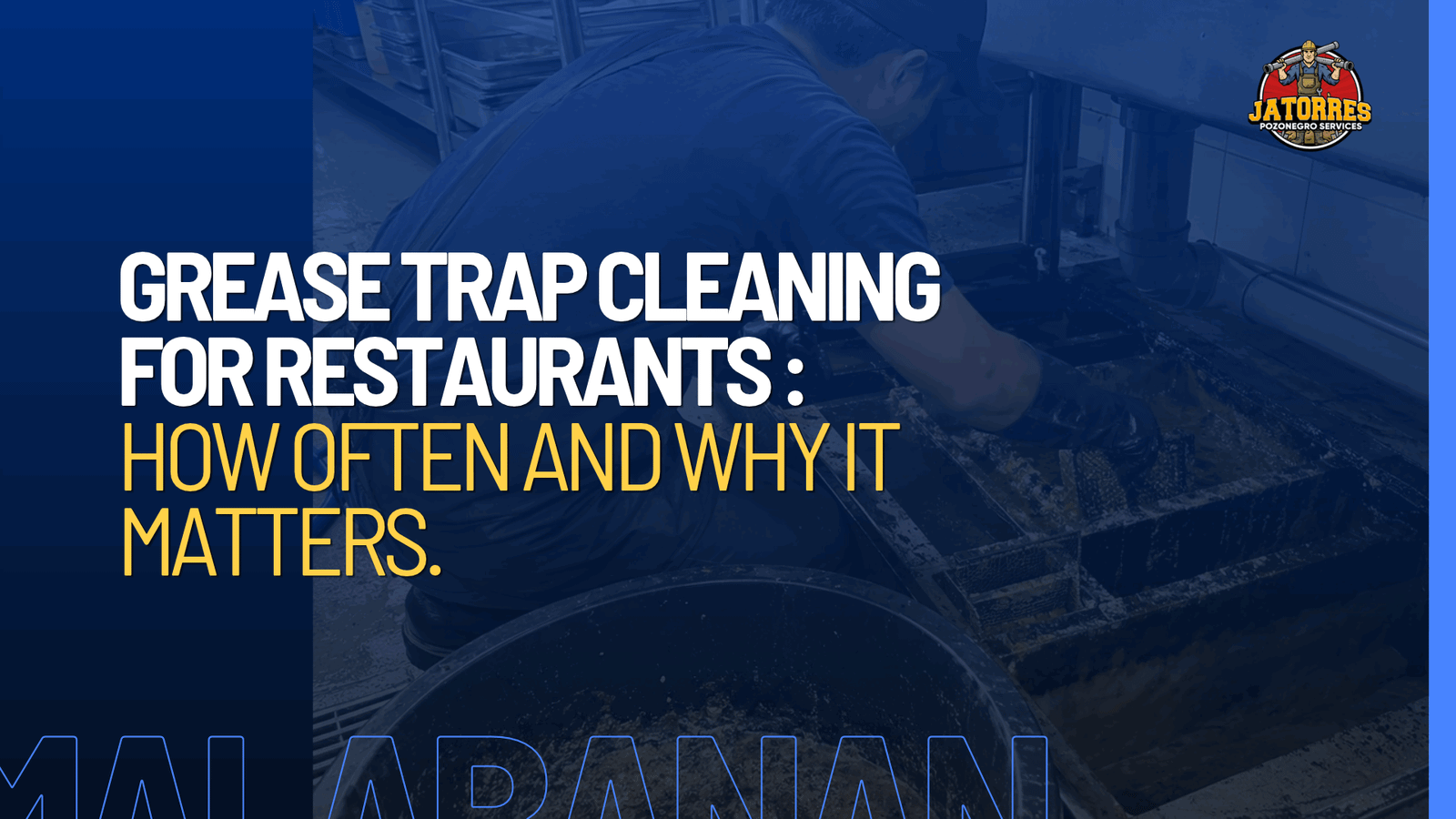
Grease and oils can be particularly problematic for properties that handle food. Businesses should follow appropriate grease-management practices rather than assuming that all cooking-related waste can safely enter drains.
Employees should also avoid flushing items that are not designed to be flushed. Wipes, plastics, sanitary products, paper towels, and other solid waste can contribute to blockages and wastewater problems.
Commercial cleaning products require appropriate handling as well. Businesses should follow product instructions and applicable disposal requirements rather than pouring unsuitable substances into drains simply because they are liquid.
The EPA’s septic system do-and-don’t guidance provides useful information about practices that can affect septic systems.
Businesses can turn this information into simple workplace policies. For example, employees can be reminded not to flush inappropriate materials and to report unusual drainage or odors rather than ignoring them.
These preventive practices do not eliminate the need for professional Business Septic Tank Siphoning. Solids still accumulate naturally inside septic tanks even when everyone follows good practices.
Think of prevention as reducing unnecessary stress on the system, while siphoning manages the material that inevitably accumulates.
Why Professional Septic Services Matter
Septic tanks contain wastewater and accumulated solids that should not be handled casually. Professional equipment provides a safer and more practical way to remove the contents of a tank.
Commercial properties also present logistical challenges that may not exist at a typical residential property. Access may be restricted, the tank may be located in a difficult position, and the business may need the work completed without unnecessary disruption.
Professional service can also help identify recurring symptoms. If a business repeatedly experiences wastewater problems, technicians can take the property’s history and current symptoms into consideration when discussing the appropriate service.
Another important factor is transparency. Businesses should be able to understand the work being recommended and the expected cost before proceeding.
JA Torres Malabanan Siphoning offers a free assessment and fixed, transparent quotation before work begins. This gives businesses an opportunity to discuss their wastewater concerns and understand the proposed service before committing.
The company’s services include septic tank siphoning, pipe declogging, manual drain cleaning, and wastewater draining. These services are available to homes and businesses across Metro Manila and nearby provinces.
Professional service is ultimately about using the right equipment and process for a job that can become messy and disruptive when handled improperly.
Choosing a Septic Tank Siphoning Provider
Choosing a septic service provider should involve more than looking for the cheapest advertised price. Commercial property owners should consider transparency, availability, service coverage, equipment, experience, and the provider’s ability to communicate clearly.
Transparent pricing is especially important. Businesses should know what service is being provided and what the expected cost will be before work begins.
Service availability matters too. Septic problems do not always occur during convenient office hours, so businesses should know how the provider handles urgent situations.
Commercial experience can also be useful. Business properties may have more complicated access requirements and higher wastewater usage than residential properties.
The provider’s service area should also be considered. A company that regularly works in the property’s area may be better positioned to respond when service is needed.
For businesses across Metro Manila and nearby provinces, Malabanan Siphoning provides septic and wastewater services for commercial and residential properties.
Businesses can also review the company’s available services before requesting an assessment.
The right provider should make the process understandable. You should know what problem is being addressed, what service is recommended, what it costs, and what steps you need to take before the appointment.
Building a Preventive Septic Maintenance Plan
A preventive maintenance plan makes septic care easier because it turns an easily forgotten task into a documented part of property management.
Start by recording the septic tank’s location and available information about its size and design. If the property has previous service records, keep them together with other facility-maintenance documents.
Next, record each siphoning appointment. Note the date, service performed, and any observations or recurring problems discussed with the provider.
Employees can also play a role. Staff members are often the first people to notice changes such as slow drainage, strange odors, or recurring toilet problems. A simple reporting process can ensure that these symptoms reach the property manager instead of being ignored.
Businesses should also reassess their plan when circumstances change. A larger workforce, longer operating hours, renovations, or increased customer traffic may change wastewater demand.
An emergency contact should be included in the maintenance plan as well. If wastewater backs up or a septic tank overflows, employees should know whom to contact and which areas should be restricted.
The EPA’s septic maintenance resources can provide additional background for property owners developing a maintenance approach.
A maintenance plan does not need to be complicated. It simply needs to answer four practical questions: What system do we have? When was it last serviced? What warning signs have appeared? Who should we call when service is needed?
Business Septic Tank Siphoning in Metro Manila and Nearby Areas
Businesses in Metro Manila and nearby provinces can face a wide range of property-maintenance challenges, and wastewater management is one of them. Commercial buildings may rely on septic systems because of their location, property configuration, or available infrastructure.
For these businesses, reliable access to septic services can be an important part of maintaining daily operations.
JA Torres Malabanan Siphoning provides septic tank siphoning and related wastewater services for homes and businesses across Metro Manila and nearby provinces. The company offers a free assessment and fixed, transparent quotation before work begins, giving property owners a clear starting point when addressing wastewater concerns.
Its services include septic tank siphoning, pipe declogging, manual drain cleaning, and wastewater draining. Businesses can review the service information to determine which type of assistance may be relevant to their situation.
For a commercial property manager, the process can begin with a straightforward assessment. Explain the symptoms, provide information about previous maintenance, identify the tank if possible, and discuss the property’s operational requirements.
The goal is not simply to respond when something goes wrong. A well-maintained wastewater system can support the broader objective of keeping the property functional and minimizing avoidable disruptions.
Commercial septic infrastructure may be easy to overlook precisely because it is hidden. Including it in routine facility maintenance helps ensure that being out of sight does not also mean being out of mind.
Conclusion
Business Septic Tank Siphoning is an important part of maintaining commercial properties that rely on septic systems. Wastewater and solids accumulate every day, and a tank that appears to be functioning normally can still require professional maintenance. When businesses ignore the system until wastewater backs up or overflows, they may face unnecessary disruption at the worst possible time.
A proactive approach is more manageable. Businesses can monitor warning signs, maintain service records, control what enters their wastewater system, and schedule professional siphoning according to the property’s actual needs.
The right maintenance schedule depends on factors such as tank capacity, wastewater volume, occupancy, business type, system design, and previous service history. Professional assessment can help businesses avoid guessing and develop a more practical maintenance routine.
For businesses in Metro Manila and nearby provinces, JA Torres Malabanan Siphoning provides professional septic and wastewater services, including septic tank siphoning, pipe declogging, manual drain cleaning, and wastewater draining. With a free assessment and fixed, transparent quotation before work begins, businesses can better understand their maintenance needs before proceeding.
A septic tank may be hidden beneath the property, but its condition can have a direct effect on employees, customers, facilities, and daily operations. Treating septic maintenance as part of normal business property care helps keep an important part of the infrastructure working where it belongs: quietly in the background.
How do I know if my business septic tank needs siphoning?
Warning signs can include slow drainage, recurring toilet backups, persistent sewage odors, bubbling drains, or wastewater appearing around the septic area. These symptoms do not always prove that the tank is full because other components can also cause similar problems. A professional assessment can help determine the actual cause.
How often should businesses schedule septic tank siphoning?
There is no single schedule that works for every business. Frequency depends on tank size, wastewater volume, number of users, business type, system design, and the rate at which solids accumulate. Reviewing maintenance records and obtaining professional assessments can help establish a schedule suited to the property.
Can septic problems affect business operations?
Yes. A serious septic problem can make restrooms unusable, create unpleasant odors, cause wastewater backups, restrict access to areas of a property, and require emergency cleanup. Customer-facing businesses may also experience disruptions to normal operations if wastewater problems are not addressed promptly.
What should I do if my business septic tank overflows?
Keep employees and customers away from affected wastewater where practical, avoid unnecessary contact with sewage, and contact a professional septic service provider promptly. Do not attempt to handle a significant wastewater overflow using unsuitable equipment. If your business is located within the service area, you can contact Malabanan Siphoning for assessment and professional assistance.