Malabanan Siphoning is one of the most effective maintenance services for septic systems in the Philippines. Whether you own a home, commercial establishment, or rental property, regular siphoning helps remove accumulated sludge, prevent backups, and extend the life of your wastewater system.
Many property owners wait until drains become slow or toilets overflow before calling for service. Unfortunately, delaying maintenance can result in expensive repairs, unpleasant odors, and potential environmental hazards. Routine septic maintenance keeps everything operating efficiently and reduces emergency situations.
This guide explains how Malabanan siphoning works, why it matters, and how to choose a dependable service provider.
Understanding Malabanan Siphoning
Malabanan siphoning refers to the professional removal of sludge, wastewater, and solid waste from septic tanks using specialized vacuum equipment. The objective is to restore storage capacity and maintain efficient wastewater treatment.
Professional technicians evaluate the tank condition, remove accumulated waste safely, and transport it for proper disposal according to local regulations.
Common related services include:
- Septic tank cleaning
- Septic pumping
- Drain cleaning
- Declogging
- Pipeline maintenance
- Vacuum truck waste removal
Regular maintenance minimizes blockages while helping preserve the integrity of underground septic systems.
How Malabanan Siphoning Works
Inspection Process
Before extraction begins, technicians inspect the septic tank and identify access points. They evaluate sludge levels and determine whether additional cleaning is necessary.
Waste Extraction
Powerful vacuum trucks pump liquid and solid waste from the tank. This process removes accumulated sludge that ordinary household plumbing cannot handle.
Proper Disposal
Collected waste is transported to approved treatment or disposal facilities, helping reduce environmental risks and supporting responsible sanitation practices.
Top Benefits of Malabanan Siphoning
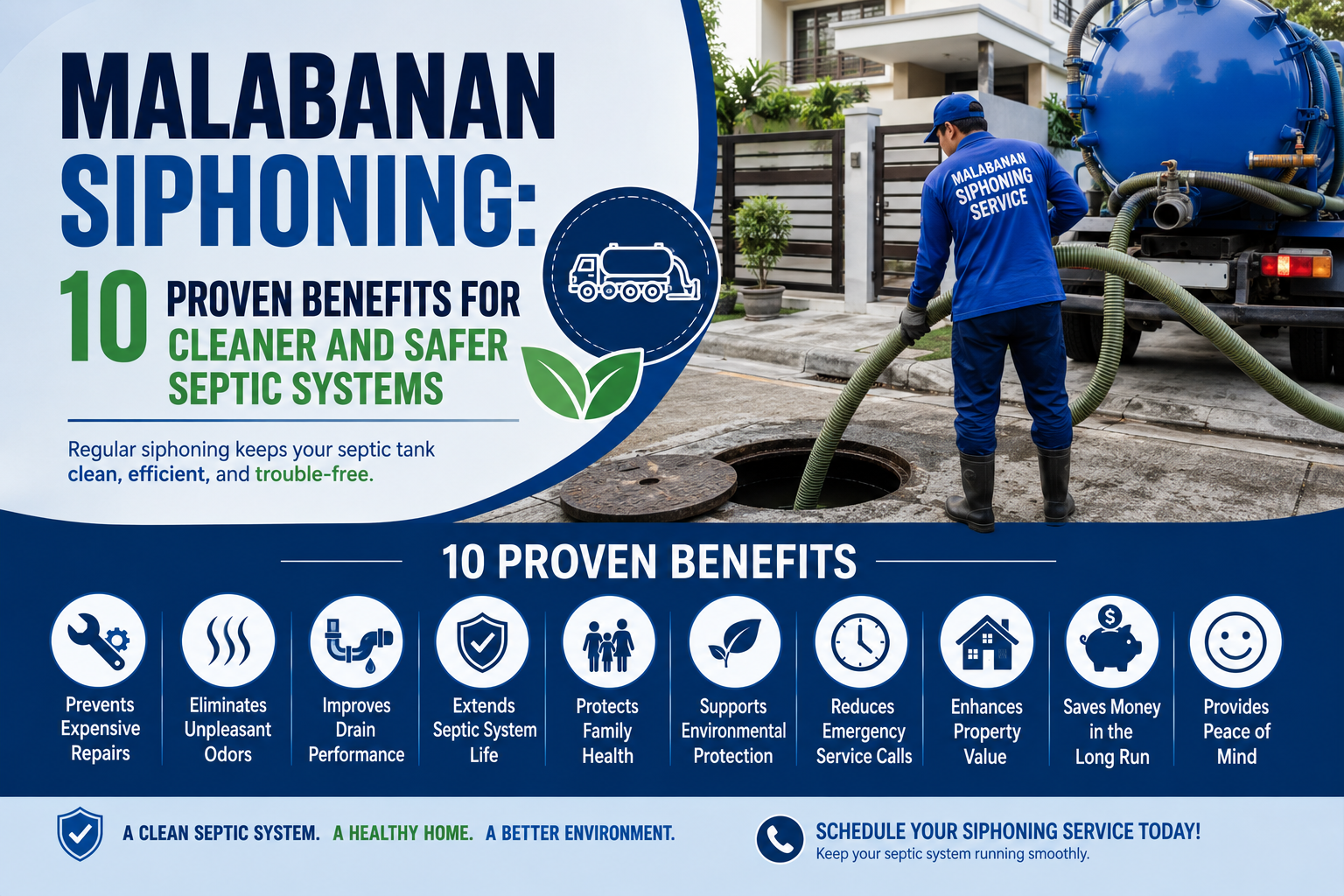
1. Prevents Expensive Repairs
Routine maintenance prevents severe clogs, overflowing tanks, and damaged plumbing systems that often require major repairs.
2. Eliminates Unpleasant Odors
Removing decomposing waste significantly reduces foul smells around bathrooms, kitchens, and outdoor septic areas.
3. Improves Drain Performance
A properly maintained septic tank allows wastewater to flow more efficiently through household drains and plumbing fixtures.
4. Extends Septic System Life
Removing excessive sludge reduces stress on tanks and drainage components, increasing their operational lifespan.
5. Protects Family Health
Overflowing wastewater may expose occupants to harmful bacteria and contaminants. Preventive maintenance helps reduce these risks.
6. Supports Environmental Protection
Proper waste collection and disposal minimize groundwater contamination and reduce pollution.
7. Reduces Emergency Service Calls
Scheduled maintenance helps avoid inconvenient midnight plumbing emergencies caused by backups.
8. Enhances Property Value
Well-maintained sanitation systems demonstrate responsible property management and may improve buyer confidence.
9. Saves Money Long Term
Preventive maintenance generally costs far less than replacing damaged septic systems or repairing flood damage.
10. Provides Peace of Mind
Knowing your septic tank is functioning properly allows homeowners and businesses to focus on daily operations without sanitation concerns.
Signs Your Septic Tank Needs Siphoning
Watch for these warning signs:
- Slow-draining sinks
- Frequent toilet backups
- Sewage odors
- Standing water near the septic area
- Gurgling plumbing sounds
- Wastewater backing into fixtures
- Overflow after heavy water use
Ignoring these symptoms may worsen the problem over time.
Residential vs. Commercial Services
Although the basic process is similar, commercial properties often require more frequent maintenance due to higher wastewater volumes.
| Residential | Commercial |
| Lower daily usage | Heavy wastewater generation |
| Smaller septic systems | Larger-capacity tanks |
| Less frequent maintenance | More regular servicing |
| Homes and apartments | Restaurants, offices, schools, and industrial sites |
Scheduling should match actual usage rather than relying solely on fixed intervals.
How Often Should You Schedule Siphoning?
Frequency depends on several factors:
- Household size
- Tank capacity
- Water consumption
- Commercial activity
- Waste composition
Many residential properties benefit from service every three to five years, while high-usage businesses may require more frequent maintenance based on inspections.
Choosing a Reliable Provider
When selecting a septic maintenance company, consider:
- Professional equipment
- Experienced technicians
- Transparent pricing
- Responsive customer service
- Safe waste handling procedures
- Positive customer reputation
- Clear scheduling and documentation
Ask questions about their inspection methods and recommended maintenance intervals before booking.
For additional information on septic system care, homeowners can consult resources from the U.S. Environmental Protection Agency (EPA):
https://www.epa.gov/septic
Maintenance Tips
After professional siphoning, follow these practices:
- Avoid flushing wipes and sanitary products.
- Minimize grease disposal down kitchen drains.
- Repair leaking faucets to reduce excess water.
- Schedule regular inspections.
- Keep heavy vehicles away from septic areas.
- Educate family members about proper waste disposal.
Consistent habits contribute to long-term system reliability.
Common Myths About Malabanan Siphoning
Myth 1: You only need service when there’s a backup.
False. Preventive maintenance is more effective and less expensive than emergency repairs.
Myth 2: Chemical additives replace siphoning.
No. Additives cannot remove accumulated sludge that requires mechanical extraction.
Myth 3: Large tanks never need cleaning.
Even oversized systems accumulate solids over time and should be inspected periodically.
Myth 4: Bad odors are normal.
Persistent odors often indicate maintenance issues or ventilation problems.
Frequently Asked Questions
1. What is Malabanan siphoning?
It is the professional removal of sludge and wastewater from septic tanks using specialized vacuum equipment.
2. How long does the process usually take?
Depending on tank size and accessibility, many jobs can be completed within a few hours.
3. Is regular siphoning necessary?
Yes. Preventive maintenance reduces the likelihood of overflows, plumbing problems, and expensive repairs.
4. Can siphoning eliminate foul smells?
In many cases, yes. Removing accumulated waste often significantly reduces septic-related odors.
5. Does every property need the same maintenance schedule?
No. Household size, water usage, and tank capacity all influence service frequency.
6. What happens if I delay siphoning for too long?
Excess sludge can contribute to backups, poor drainage, environmental contamination, and costly system failures.
Conclusion
Malabanan Siphoning is an essential maintenance service that supports efficient wastewater management, protects public health, and extends the life of septic systems. By scheduling routine service before problems arise, homeowners and businesses can reduce repair costs, improve drainage performance, and maintain a cleaner environment.
Preventive care remains the most practical approach. Whether for a residence or commercial facility, consistent septic maintenance delivers long-term value and greater peace of mind.