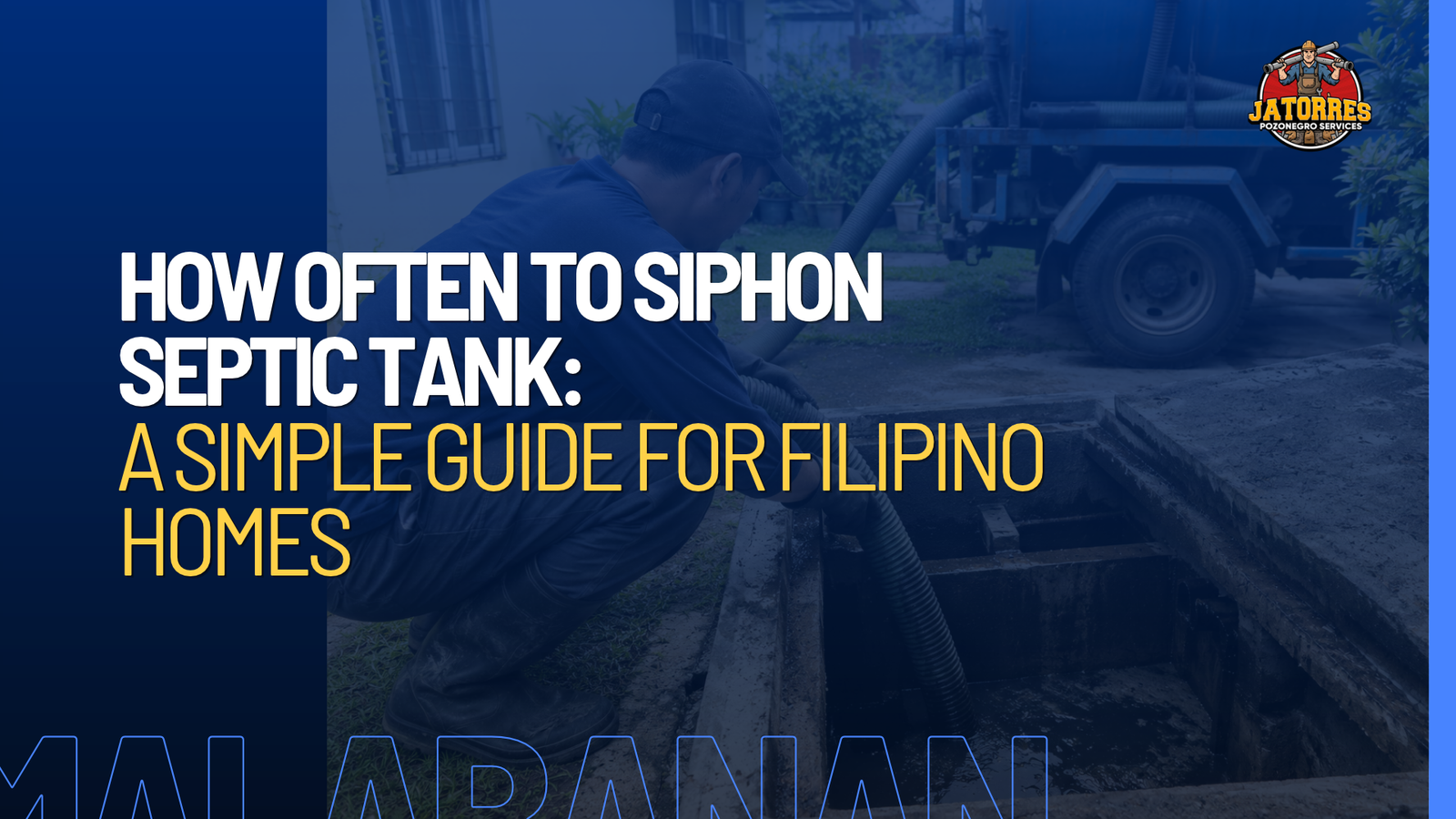
Siphoning, Declogging, Drain Cleaning, Costs and Maintenance
If you have ever dealt with a slow-draining toilet, a gurgling floor drain, or that unmistakable sewage smell creeping through the house, you have met the problem that Malabanan services exist to solve. This guide explains everything Filipino homeowners and business owners need to know in 2026: what these services actually cover, how septic tank siphoning works, how much it typically costs, and how to keep your system healthy so you call for help less often.
In this guide
- What “Malabanan” service actually means
- The core services explained
- Warning signs you need service now
- How the siphoning process works
- How much it costs in 2026
- How often to siphon your septic tank
- Maintenance tips that save money
- How to choose a legitimate provider
- Frequently asked questions
What “Malabanan” Service Actually Means
In the Philippines, “Malabanan” has become a generic, everyday word for septic tank siphoning and drainage cleaning — the same way Filipinos say “Colgate” for toothpaste or “Xerox” for photocopying. The term traces back to early siphoning companies that carried the Malabanan family name, and over the decades it grew into shorthand for the entire trade.
So when someone says they need a “Malabanan,” they usually mean they need a crew with a vacuum truck and the right tools to pump out a full septic tank (sipsip pozo negro), clear a blocked pipe (tanggal bara), or drain a flooded, backed-up system. It is wastewater and sanitation work — not a single brand, but a whole category of essential home and commercial service.
The Core Services Explained
A full-service provider does far more than empty septic tanks. Here is what each common service involves and when you would need it.
Septic Tank Siphoning (Sipsip Pozo Negro)
This is the headline service. A vacuum truck pumps accumulated sludge, liquid, and solid waste out of your septic tank or pozo negro, then hauls it to an authorized treatment and disposal facility. Siphoning is what stops backups, eliminates foul odors, and prevents the tank from overflowing into your yard or back up through your fixtures.
Septic Tank Cleaning (Manual Cleaning)
Where siphoning pumps out what the truck can reach, manual cleaning goes deeper. Technicians physically remove the hardened sludge, grease cake, and compacted solids that pumping alone leaves behind. For older tanks that have not been serviced in years, manual cleaning restores capacity that a quick pump-out cannot.
Pipe Declogging (Tanggal Bara)
Blocked toilets, kitchen sinks, floor drains, and main sewer lines are cleared using specialized declogging equipment — augers, snakes, and high-pressure methods that break through grease, scale, roots, and foreign objects. This is the fast fix for the “ang bagal mag-drain” complaint and for toilets that refuse to flush properly.
Manual Drain Cleaning
Some blockages — heavy grease in a restaurant line, sludge in an old drainage channel — cannot be solved by machines alone. Manual drain cleaning is the hands-on removal of debris that an auger would just push around, and it is common in commercial kitchens and long-neglected lines.
Wastewater Draining
After heavy rain or flooding, properties are left with stagnant water, mud, and contaminated wastewater. Heavy-duty pumping draws out floodwater and standing wastewater quickly, which matters for both health and structural reasons in flood-prone parts of the country.
Plumbing Repair and Pipe Installation
Recurring clogs and backups are often a symptom, not the disease. Broken pipes, poor slopes, leaking joints, and undersized lines need actual repair or replacement. Full-service providers handle pipe installation, leak repair, and fixture work so the root cause gets fixed — not just the symptom.
Septic Tank Construction
For new builds, renovations, or systems that have failed beyond repair, a properly sized and sealed septic tank is built to code. A correctly constructed tank with the right compartments and capacity is the single biggest factor in how rarely you will need siphoning later.
Preventive Maintenance
The cheapest service call is the emergency you never have. Scheduled inspections and routine cleaning keep your system running and catch small problems — a slow drain, a hairline crack — before they become a flooded bathroom at 2 a.m.
Warning Signs You Need a Malabanan Service Now
Septic and drainage problems rarely appear overnight. Your system almost always warns you first. Watch for these signs:
- Slow drainage across multiple fixtures — sinks, tubs, and toilets all draining sluggishly at once points to a main line or tank problem, not just one clogged drain.
- Foul odors indoors or around the area above your septic tank.
- Gurgling sounds from toilets or drains when water runs elsewhere in the house.
- Water or sewage pooling on the ground above or near the septic tank.
- Backups — wastewater rising in the lowest drains or the toilet when you flush.
- Unusually lush, soggy grass over the drain area, which can signal leaking effluent.
Acting on the early signs (slow drains, faint smell) is cheap. Waiting until there is a backup or overflow turns a routine service into an emergency call — and emergencies always cost more.
How the Siphoning Process Works
A professional siphoning job is straightforward and, done right, should take only a couple of hours for a typical home.
- Inspection and assessment. The crew locates the tank, checks access, and estimates the volume and condition of the waste. This is when you should get a clear, fixed quotation.
- Accessing the tank. The cover or access point is opened. For buried or hard-to-reach tanks, some manual digging may be needed.
- Vacuum pumping. A hose from the vacuum truck draws out liquid and sludge until the tank is emptied.
- Manual cleaning (if needed). Hardened solids and grease that pumping leaves behind are removed by hand for a thorough job.
- Inspection of the empty tank. The crew checks for cracks, damaged baffles, or structural issues you should know about.
- Responsible disposal. The collected waste is transported to an authorized treatment facility, in line with environmental regulations — not dumped illegally.
How Much Do Malabanan Services Cost in 2026?
There is no single fixed price for siphoning in the Philippines, and any provider who quotes an exact figure sight-unseen should make you cautious. Cost depends on tank size, how accessible the tank is, the volume and condition of the waste, your location, and how urgent the job is. The table below shows typical 2026 market ranges to help you budget — treat them as a guide, not a quote.
| Service | Typical 2026 starting range* | Notes |
|---|---|---|
| Septic tank siphoning (standard residential) | From ~₱3,500 per trip | Varies with tank size and waste volume |
| Pozo negro cleaning (with solid waste removal) | From ~₱4,000 | Includes thorough manual cleaning |
| Pipe / drain declogging | From ~₱1,500 | Depends on blockage severity and line length |
| Emergency / after-hours service | Premium over standard rates | 24/7 response carries a surcharge |
| Septic tank construction (new build) | From ~₱40,000+ materials, plus ~₱15,000–₱20,000 labor | Highly dependent on size and design |
*Indicative market ranges compiled from Philippine siphoning providers in 2025–2026. Actual pricing is confirmed only after a free on-site assessment. Provincial jobs may add travel costs; Metro Manila rates differ from rural areas.
What drives the price up or down
- Tank size and waste volume — bigger tanks and more accumulated sludge mean more pumping and disposal.
- Accessibility — a buried tank or one that is hard to reach raises labor.
- Severity — simple cleaning costs far less than breaking through a major blockage.
- Location and travel distance — service rates vary by city and province.
- Urgency — middle-of-the-night emergencies cost more than a scheduled visit.
Be wary of quotes that sound far cheaper than everyone else. With sanitation work, suspiciously low pricing often means cut corners, unregistered operators, or illegal dumping — which can come back to cost you much more.
How Often Should You Have Your Septic Tank Siphoned?
As a general rule, every 1 to 3 years for most households — though larger families or heavy-use commercial properties may need it more often, while small households with a large, well-maintained tank can sometimes go longer. The right interval depends on:
- Tank capacity — a bigger tank fills more slowly.
- Number of occupants — more people means more waste, faster.
- Usage patterns — a home-based business, a karinderya, or many guests all accelerate buildup.
If you are not sure, schedule an inspection. A technician can tell you the sludge level and recommend a realistic schedule rather than guessing.
Maintenance Tips That Save You Money
Most emergency calls trace back to habits that quietly damage the system. A few simple rules dramatically extend the time between service visits.
Do
- Schedule routine siphoning before problems start, based on your tank size and household.
- Spread out heavy water use (laundry, large washes) instead of overloading the system in one day.
- Use drain strainers in sinks and showers to catch food scraps and hair.
- Keep records of when the tank was last serviced so you can plan the next visit.
- Have the tank inspected for cracks or damaged baffles whenever it is pumped.
Don’t
- Flush wipes, sanitary products, cotton buds, or “flushable” wipes — they do not break down and are a top cause of blockages.
- Pour cooking grease or oil down the drain; it hardens and chokes the line.
- Overuse harsh chemical drain cleaners, which can damage pipes and kill the bacteria your tank needs to work.
- Build structures or park heavy vehicles over the septic tank and drain area.
- Ignore early warning signs in the hope they go away — they get worse and more expensive.
How to Choose a Legitimate Malabanan Provider
The siphoning trade has plenty of reliable professionals — and a fair number of “fly-by-night” operators. Protecting yourself is simple if you check a few things before you hand over payment:
- Proper registration and permits. A legitimate company can show business registration, the relevant local permits, and environmental compliance for waste disposal. Huwag mahiyang humingi ng papeles.
- Responsible disposal. Ask where the waste goes. Reputable providers haul to authorized treatment facilities, not to a random creek or empty lot.
- Transparent, fixed pricing. A clear quotation before work begins — walang hidden charges — is the mark of a professional.
- Proper equipment. Modern vacuum trucks and professional declogging machines, not improvised shortcuts.
- Reviews and track record. Look for consistent, verifiable feedback from real customers.
- A real warranty. Standing behind the work signals confidence in it.
Need a Malabanan service you can trust?
JA Torres Malabanan Siphoning offers 24/7 septic tank siphoning, declogging, and drain cleaning for homes and businesses across the Philippines — with free assessment, fixed quotations, and responsible waste disposal. Tumawag ka lang, anong oras man.
📞 0917-7812585 (Globe) | 0928-6845511 (Smart) | 0995-3570018 (Viber)
Get a Free Quote →
Frequently Asked Questions
What does a Malabanan siphoning service include?
It typically includes removing accumulated sludge, liquid, and solid waste from your septic tank or pozo negro using a vacuum truck, optional manual cleaning of hardened solids, an inspection of the tank, and responsible disposal of the waste at an authorized facility.
How often should I have my septic tank siphoned?
Most households need siphoning every 1 to 3 years. The exact interval depends on your tank’s capacity, the number of people using it, and how heavily it is used. An inspection can give you a precise recommendation.
How much does septic tank siphoning cost in the Philippines in 2026?
Standard residential siphoning typically starts around ₱3,500 per trip, but the final price depends on tank size, accessibility, waste volume, location, and urgency. Reputable providers confirm the cost after a free assessment, with no hidden charges.
What are the signs that I need a Malabanan service?
Slow drainage across several fixtures, foul odors, gurgling sounds in the plumbing, water or sewage pooling near the tank, and backups in your lowest drains are all signs you should book service soon.
Are emergency services available 24/7?
Yes. Established providers offer round-the-clock emergency response for backups, overflows, and severe blockages, since these problems do not wait for office hours.
Is the waste disposed of safely?
It should be. A legitimate company transports collected waste to an authorized treatment and disposal facility in compliance with environmental regulations. Always ask a provider how they handle disposal.