A septic tank overflow after rain is one of the most stressful problems a homeowner in Metro Manila can face. One heavy downpour, and suddenly the toilet won’t flush, the bathroom smells like a canal, and dirty water is creeping across the floor.
You are not alone. By October, after months of habagat rains and typhoons, many homes in Caloocan, Valenzuela, Malabon, Navotas, Quezon City and nearby Bulacan deal with the same thing.
This guide explains why septic tank overflow after rain happens, the warning signs, the first-hour steps, safety, and when to call for septic tank siphoning. We have done this work for over 20 years, so we will keep it practical.
Why Septic Tank Overflow After Rain Happens
Your septic tank is a closed concrete box under your house or garage. Wastewater goes in, solids settle at the bottom as sludge, and the liquid flows out through an outlet pipe to a leaching area or the drainage line.
When it rains hard, that simple system gets pushed from several sides at once.
Floodwater and high groundwater push in
In low-lying areas, the ground becomes soaked after days of rain. The water table rises. Water seeps into the tank through cracks, loose covers, and old joints, and a half-full tank fills up quickly.
If the street floods, the outlet pipe goes underwater and the liquid in your tank has nowhere to go. Sometimes floodwater even flows backward into the tank. That is the classic septic tank overflow after rain.
The outlet or drainage line is blocked
Many homes connect the tank outlet to a street canal. During heavy rain, that canal fills with water, garbage and silt. When the canal is higher than your outlet, your tank cannot drain, and a septic tank overflow after rain follows.
The tank was already puno
Here is the part many people miss. A tank that is already puno na septic tank, full of sludge, has very little room left. Even a small amount of extra rainwater is enough to tip it over. Most cases of septic tank overflow after rain happen in tanks that were overdue for siphoning anyway.
If you are not sure when your tank was last emptied, read our guide on how often to siphon a septic tank.
Puno Na Ba? Signs of a Septic Tank Overflow After Rain
Some signs are obvious. Others are quiet warnings that come a day or two before a real backup. Watch for these:
- Bad smell (mabaho) in the bathroom, kitchen drain, garage, or near the tank cover. Rotten egg or sewage smell is a red flag.
- Slow flush. The toilet takes longer to drain, or the water rises high in the bowl before going down.
- Gurgling sounds in drains or the toilet after you flush or use the sink.
- Dirty water comes up through the floor drain, shower drain, or toilet. This is a backflow toilet flood, and it means the system is full.
- Wet floors or damp spots near the tank, the garage floor, or the base of the bathroom walls.
- Water seeping from the tank cover or the ground above it, sometimes with a dark color.
- Many drains slow at the same time. One slow sink is usually a local clog. All drains slow together usually points to the tank.
If you see two or more of these after a heavy rain, treat it as a likely septic tank overflow after rain and follow the steps below.
Barado lang ba, or puno na?
Not every slow drain is a full tank. Sometimes it is just barado, a clog in the pipe. This quick table can help you tell the difference.
| What you notice | Likely a clog (barado) | Likely a full or flooded tank |
| Only one fixture is slow | Yes | Less likely |
| All toilets and drains are slow | Less likely | Yes |
| Problem started right after heavy rain or flooding | Possible | Very likely |
| Sewage smell outside near the tank | Less likely | Yes |
| Water comes up from the floor drain when you flush | Possible | Very likely |
| Plunger or tanggal bara tool fixes it | Yes | No, it comes back |
| Tank not siphoned in many years | Not related | Very likely |
A clog may only need declogging. A full tank needs siphoning. When in doubt, call and describe what you see.
What to Do in the First Hour
When you notice a septic tank overflow after rain, the first hour matters. Stop making it worse and keep everyone safe. Follow these steps in order.
- Stop using water right away. No flushing, no showers, no laundry, no dishwashing. Every liter you use goes into a tank that is already full. Tell everyone in the house, including kids and helpers.
- Keep people and pets away from the wet area. Overflow water carries sewage. Do not let children play in it. Keep pets out of the bathroom and garage.
- Turn off electricity in flooded areas. If water is near outlets, extension cords, or appliances on the floor, switch off the breaker for that area. Only do this if you can reach the breaker without standing in water.
- Move valuables up. Lift rugs, boxes, and shoes off the floor near the bathroom or garage.
- Open windows and doors. Septic smells build up fast in small rooms.
- Do not open the tank or go near the manhole. Leave the cover closed. More on this in the safety section.
- Take photos and note the time. Photos of the backflow, the wet floor, and the tank area help the siphoning crew understand the problem before they arrive.
- Call for help if the backflow does not stop. If sewage is still coming up after you stopped using water, or it is entering living areas, call a siphoning team.
These steps will not fix a septic tank overflow after rain. They buy you time and reduce damage until the tank can be emptied.
Safety First: Never Enter a Septic Tank
Septic tanks produce dangerous gases, including hydrogen sulfide and methane. These gases can make a person pass out in seconds. People have died climbing into tanks, and rescuers have died trying to save them. The US Environmental Protection Agency also warns that only trained specialists should clean or repair septic tanks because they may contain dangerous gases (EPA: Septic Systems – What to Do After the Flood).
Follow these rules:
- Never enter a septic tank or lean your head into the opening, for any reason.
- Do not light matches, cigarettes, or open flames near the tank cover or vent pipe.
- Do not try to scoop or pump out the tank yourself with buckets or a small water pump.
- Wear rubber boots and gloves if you must walk through overflow water. Wash hands and feet with soap after.
- Clean surfaces with diluted bleach once the water is gone. Throw away items that cannot be washed, like soaked cardboard.
- Watch for illness. If anyone gets fever, diarrhea, or skin wounds after contact with floodwater or sewage, see a doctor. Mention the exposure.
During any septic tank overflow after rain, if a tank cover is broken or missing, block the area so no one falls in.
When to Wait vs. When to Call
Not every septic tank overflow after rain needs a truck the same night. Sometimes waiting a little is smarter. Here is how to decide.
It may be okay to wait if:
- The street or yard is still underwater, and the problem is mild (a bit of smell, a slightly slow flush).
- You can cut water use and the backflow stops.
- The house has a second toilet that still works.
Why wait? If floodwater is still high, siphoning may only give short relief because outside water can flow right back in. The EPA notes that pumping a tank while the ground is still flooded is, at best, a temporary fix, and in bad conditions can damage the inlet and outlet pipes. Once the water goes down, emptying the tank works much better.
Call right away if:
- Sewage is coming up into the living area, kitchen, or bedrooms.
- You have only one toilet and it no longer works.
- There is a strong sewage smell indoors that does not go away.
- The tank cover is cracked, lifting, or overflowing onto a walkway.
- You run a business, like a carinderia, apartment, or small clinic, and you cannot close.
- The floodwater has already gone down, but the backflow continues. This usually means the tank itself is full.
Even if you decide to wait, call to ask. A short call can tell you if your septic tank overflow after rain is urgent or can wait for the next dry day.
Flood-Zone Homes: Extra Tips
If your home is in a low area that floods every rainy season, like parts of Malabon, Navotas, Valenzuela, and Caloocan near the creeks, septic tank overflow after rain can be a yearly event. A few extra steps help.
- Siphon before the rainy season, not during it. An empty tank has room for the extra water that seeps in. A full tank overflows on day one.
- Check the tank cover and seal. A loose or broken cover lets floodwater pour straight in. Ask a mason to reseal or replace it.
- Install a check valve (backflow valve) on the outlet line if your plumber recommends it. This can help stop canal water from flowing back into your tank.
- Raise the floor drain or add a drain plug in the lowest bathroom or garage so sewage cannot push up as easily.
- Know where your tank and manhole are. Keep the cover clear of plants, tiles, and stored items so the crew can reach it fast.
- Keep the canal outside clear. Coordinate with your barangay or neighbors about clogged canals before the next typhoon.
A tank that floods every year collects more silt, so flood-zone homes may need more frequent siphoning.
How to Prevent Septic Tank Overflow After Rain Next Season
The best time to deal with a septic tank overflow after rain is months before it happens. Here is a simple prevention plan for the dry months, roughly December to May.
- Schedule septic tank siphoning in the dry season. An empty tank before June is the best defense against septic tank overflow after rain.
- Follow a regular siphoning cycle. Many homes need emptying every few years, depending on tank size and how many people live there. Our guide on how often to siphon a septic tank explains how to estimate yours.
- Check if you are covered by a water utility program. Maynilad and Manila Water both run desludging programs for some customers on fixed cycles. Manila Water, for example, desludges on a five-year cycle, and customers pay if they ask for service outside their barangay’s schedule (Inquirer). If your schedule is years away, or you are not covered, private siphoning fills the gap. We compare both in Maynilad desludging vs. private siphoning.
- Do not flush trash. Wipes, napkins, diapers, cigarette butts, and plastic fill the tank fast and do not break down.
- Keep grease out of the sink. Cooking oil hardens in pipes and adds to the scum layer in the tank. Restaurants should keep their grease trap clean.
- Fix leaking faucets and running toilets. A toilet that runs all day keeps filling your tank.
- Inspect the cover, pipes, and vent before June. Look for cracks, sinking ground, or a bad smell outside.
A clean tank, a tight cover, and a clear outlet line together make septic tank overflow after rain far less likely.
How Septic Tank Siphoning Works
If you have never had your tank emptied, it helps to know what siphoning actually is. Sa Tagalog, many people call it pasipsip or sipsip pozo negro.
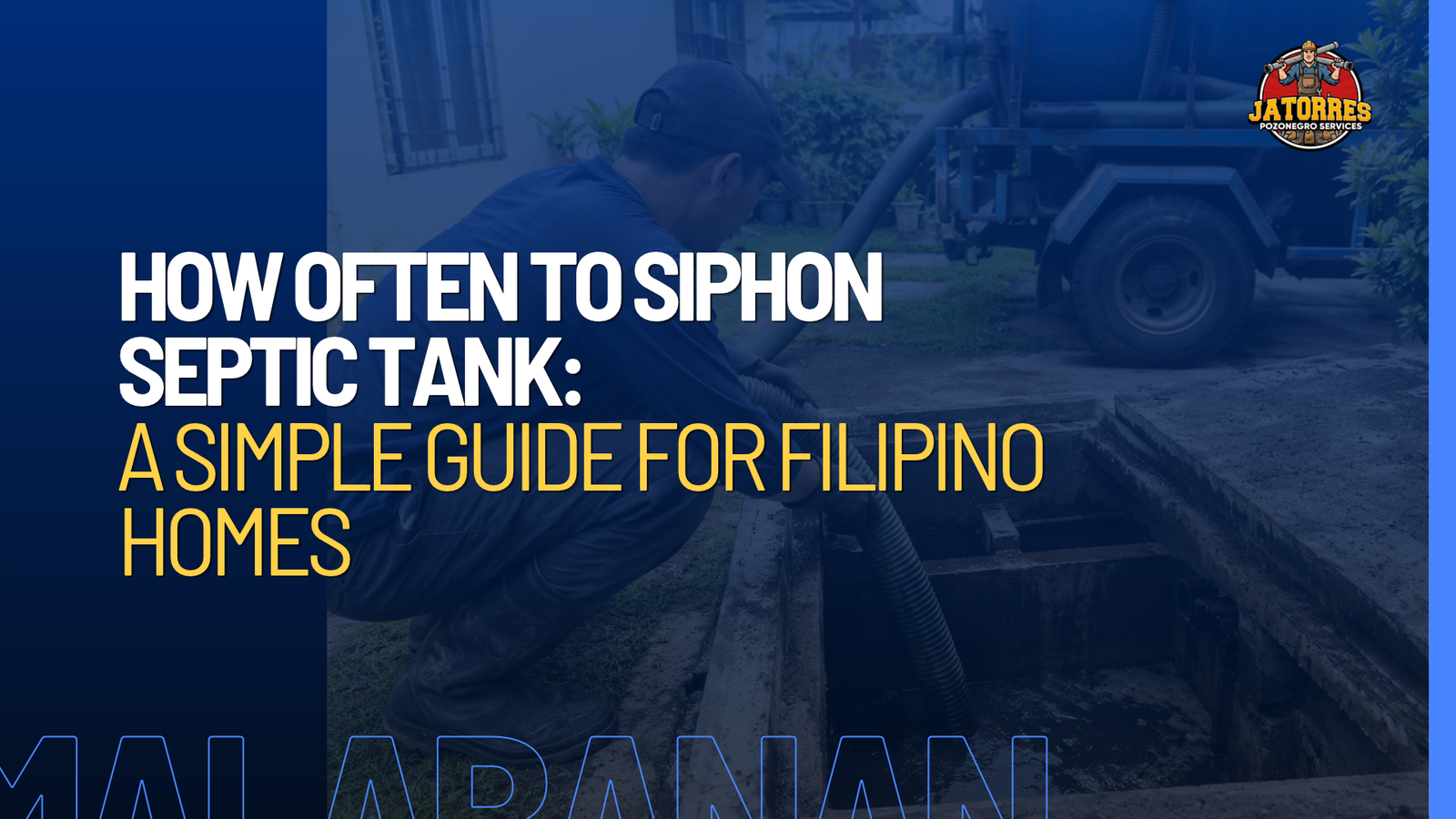
A siphoning truck has a large sealed tank and a powerful vacuum pump. The crew opens your septic tank manhole, lowers a thick hose into it, and the pump sucks out the liquid, scum, and sludge. Everything goes into the sealed truck, not onto your street.
The crew may break up hard sludge so it can be pulled out. Then they check the inlet and outlet, close the cover, and clean up.
The waste is then hauled to a treatment or disposal facility. Our trucks bring collected waste to DENR-accredited partner treatment facility, and we operate under our official waste transport clearance and disposal permits. Always ask any siphoning company where the waste goes. Dumping septage in canals is illegal and makes flooding worse for everyone.
You can learn more about our process on our septic tank siphoning service page.
What Happens on the Day of Siphoning
Here is what to expect when you book siphoning after a septic tank overflow after rain.
Before the crew arrives
- Tell us your location and access. Narrow street? Low gate? Manhole inside or outside?
- Clear the path. Move cars, motorcycles, plants, and stored items away from the tank cover.
- Find the manhole. If it is tiled over or buried, tell us.
- Keep water use low until the crew finishes.
During the job
- The truck parks as close as possible. Our hose reach is about 50 meters.
- The crew opens the manhole and checks the level and condition of the tank.
- The vacuum hose goes in, and siphoning starts. A typical home tank takes about 45 minutes to 2 hours], depending on size and how hard the sludge is.
- The crew checks the pipes for blockages and may do declogging if needed.
- The cover is closed and sealed, and the area is cleaned and sprayed.
After the job
- Flush once and run a sink to confirm everything drains well.
- Ask the crew about the condition of your tank: cracks, broken baffles, or signs of groundwater leaking in.
- Ask for a receipt with the date, and note it so you know when to siphon again before the next septic tank overflow after rain.
How much does it cost?
Price depends on tank size, number of truckloads, distance, access, and whether it is a night emergency call after a septic tank overflow after rain. Our rates start at ₱5,000 per truckload within Metro Manila. We give the price before we start, so there are no surprises.
Frequently Asked Questions
Bakit umaapaw ang septic tank tuwing umuulan?
Groundwater rises and floodwater seeps into the tank through cracks and loose covers. If the outlet canal is flooded too, the tank cannot drain. A tank already full of sludge overflows first. Regular siphoning is the best way to prevent septic tank overflow after rain.
Is septic tank overflow after rain dangerous to my family?
Yes, it can be. Overflow water contains sewage that can carry germs causing diarrhea and skin infections. The tank also releases harmful gases. Keep children and pets away, wear boots and gloves, and never open or enter the tank.
Should I siphon my tank while the street is still flooded?
Usually it is better to wait until the floodwater goes down, unless sewage is entering your living areas. While the ground is still flooded, outside water can refill the tank quickly. If the backflow is serious, call anyway. We can advise if it is safe and worth doing now.
Puno na ba ang septic tank ko? How can I tell?
Common signs include slow flushing in all toilets, gurgling drains, bad smell near the tank, and water coming up from floor drains. If these show up together right after a storm, it is likely a septic tank overflow after rain.
Can I use chemicals or additives to fix it?
No. Additives do not empty a full tank, and harsh chemicals can damage pipes. The real fix for septic tank overflow after rain is siphoning by a trained crew.
How often should I have sipsip pozo negro done?
It depends on tank size and the number of users. Many homes need it every few years; flood-zone homes, rentals, and small businesses may need it more often. See our guide on how often to siphon a septic tank.
Is a backflow toilet flood always caused by the septic tank?
Not always. Sometimes it is a blocked pipe between the toilet and the tank. If only one toilet is affected and a plunger helps, it is likely a clog. If all drains back up, the tank or outlet line is the more likely cause.
Do you serve Bulacan and do emergency calls at night?
Yes. We are open 24/7 and serve Caloocan, Valenzuela, Malabon, Navotas, Quezon City, and nearby Bulacan areas like Meycauayan, Marilao, and San Jose del Monte. Visit our homepage for our full list of services.
Final Word
A septic tank overflow after rain feels like an emergency, and sometimes it is. Stop using water, keep everyone safe, and do not open the tank. If the backflow does not stop, get help.
Then plan ahead. Siphon in the dry season, keep the cover sealed, and keep trash and grease out of your drains. That way, septic tank overflow after rain does not become a yearly problem.
Umaapaw na ba ang inidoro pagkatapos ng ulan? Huwag nang hintayin lumala. JA Torres Malabanan Siphoning is open 24/7. Call or text 0995-357-0018, our one official hotline. Based in Bankers Village, Brgy. 167, Caloocan, serving North Metro Manila and nearby Bulacan.