Quick answer
Septic tank cleaning for apartments is needed far more often than for a single house, because more people share one tank. A small paupahan typically needs siphoning every 1 to 2 years, and apartment buildings and dorms every 6 to 12 months. Set tenant rules, budget monthly and keep receipts.Key takeaways
- More users means a faster-filling tank, and an overflow affects every unit at once.
- Rough schedule: small paupahan every 1–2 years; apartment buildings and dorms every 6–12 months.
- Put CR rules in the rental contract and explain them at move-in.
- Set aside a small amount from rent each month for siphoning.
- Keep every receipt for inspections, tenant disputes and a future sale.
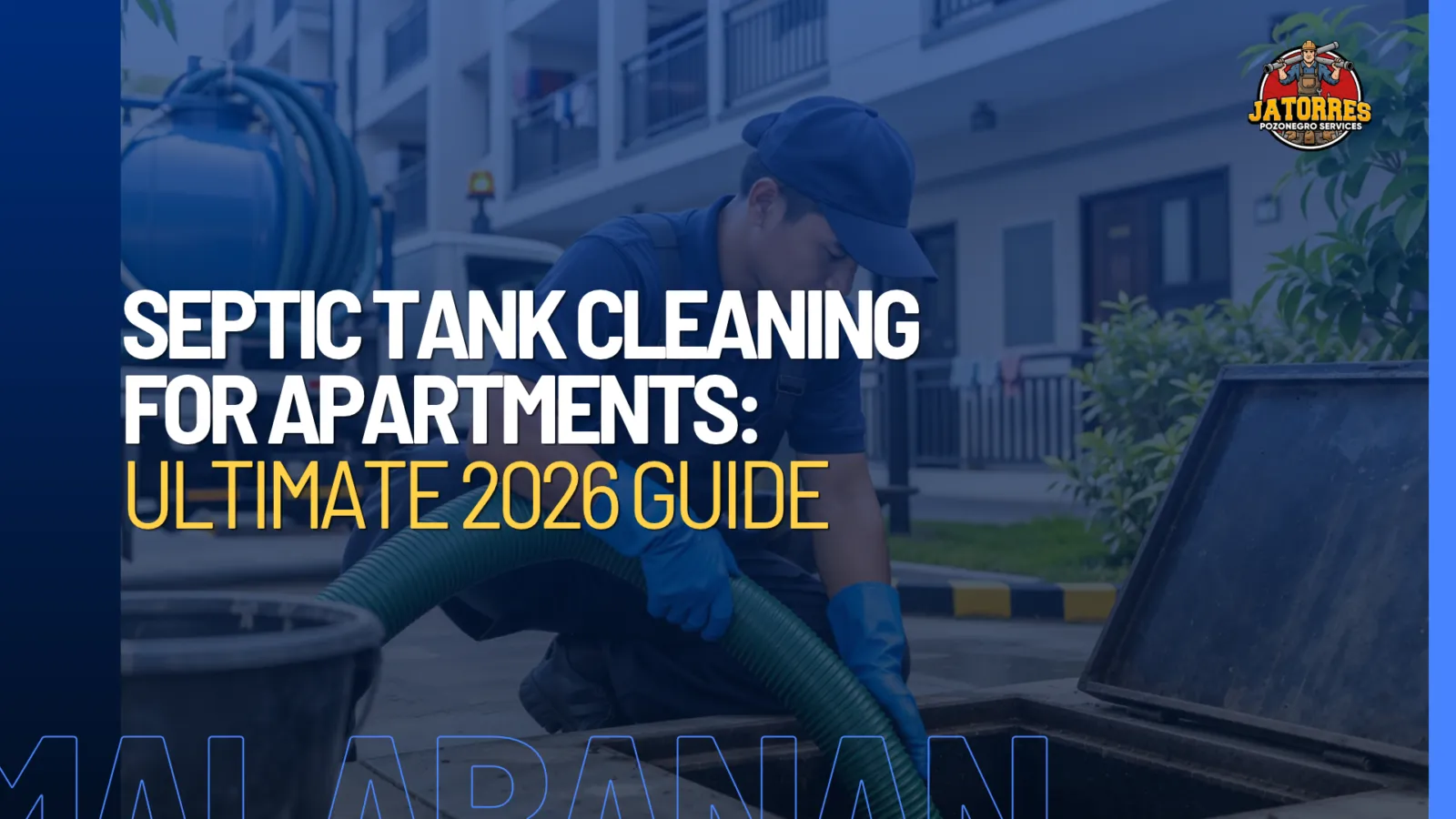
Septic tank cleaning for apartments is one of those jobs nobody thinks about until a toilet backs up at 11 p.m. and five units are calling you at once. If you own a paupahan, a dorm, a bedspace or a small apartment building, your septic tank works much harder than the one in a single-family house.
This guide is for landlords in Caloocan, Valenzuela, Malabon, Navotas, Quezon City and nearby Bulacan. It covers how often to siphon, what to tell tenants, budgeting and emergencies.
Why paupahan and dorm septic tanks fill faster
Mas maraming tao, mas mabilis mapuno. That is the whole story in one line.
A house with five people sends a certain amount of waste and water into the tank each day. A two-storey paupahan with eight units can easily have 20 to 30 people using the same tank. A dorm or bedspace can have even more.
Several things make rentals harder on a septic tank:
- More users per tank. Many older apartment buildings share one tank that was sized for a single family.
- Turnover. New tenants may flush wipes, napkins or cooking oil without thinking.
- Shared CRs. In bedspace and dorm setups, one CR may serve a whole floor.
- Laundry and kitchens. Each unit washing clothes and dishes adds water. Too much water pushes solids out of the tank before they settle.
The result is simple. The tank fills in a fraction of the time a family home would take. That is why regular septic tank cleaning for apartments should be on your calendar, not left to chance.
What a septic overflow really costs a landlord
An overflow in a single home is a bad day for one family. In a paupahan, it is a bad week for everyone.
Here is what usually happens:
- Every unit is affected. Ground-floor CRs back up first, but nobody upstairs can flush either.
- Tenant complaints pile up. Your phone rings non-stop. Some tenants ask for a rent discount.
- Vacancies. Tenants who are already unhappy may use the smell as the reason to move out. Prospective tenants walk away during viewings.
- Reputation. Word travels fast in a barangay and in online groups. “Mabaho sa paupahan na ‘yan” is hard to undo.
- Health risks. Sewage on floors and in canals carries germs. Children and elderly tenants are most at risk.
- Bigger repairs. Backflow can damage tiles, walls and pipes.
Compare that with the cost of planned siphoning. In most cases, planned septic tank cleaning for apartments is the cheaper choice by far.
How often should apartments siphon? A rough schedule by property type
There is no single number for every building. Tank size, number of people, water use and tank condition all matter. Our main guide on how often to siphon a septic tank explains the factors in detail.
The table below is a rough starting point only. Your actual schedule should come from an inspection of your tank.
| Property type | Typical number of users | Rough siphoning interval | Notes |
|---|---|---|---|
| Single house with 1–2 rented rooms | 6–10 | Every 2–3 years | Watch for slow drains as more tenants move in |
| Small paupahan (3–5 units) | 10–20 | Every 1–2 years | Shared tank fills much faster than a house |
| Apartment building (6–12 units) | 20–40 | Every 6–12 months | Inspect yearly even if no problems |
| Dorm or bedspace | 20–60+ | Every 6–12 months, sometimes more often | Heavy use, frequent turnover |
| Mixed-use (units + carinderia or shop) | Varies | Septic every 6–12 months; grease trap much more often | Grease trap needs its own schedule |
If your tank is old, small or has never been siphoned, start with an inspection. After one or two visits of septic tank cleaning for apartments like yours, the right rhythm becomes clear.
House rules: what to tell tenants about the CR
Most septic problems in rentals start inside the units. Clear rules, explained early, prevent most of them.
Rules to put in the rental contract
Add a short “CR and drainage” section to your contract. Keep it plain and specific. For example:
- Do not flush wipes, napkins, diapers, cotton buds, condoms or hair.
- Do not pour cooking oil or grease into sinks or toilets.
- Use only the amount of toilet paper you need.
- Report leaks, running toilets and slow drains right away.
- Do not use strong chemicals or “pang-tunaw” products without asking the landlord.
- Tenants may be charged for declogging caused by items that are not allowed.
That last line is your choice. Ask a lawyer if you are unsure how to word it. What matters is that it is written and signed.
Move-in orientation
When a new tenant arrives, take five minutes to walk them through the basics:
- Show them the CR and explain what can and can’t be flushed.
- Point to the trash bin for napkins and wipes.
- Show the kitchen sink strainer and tell them where to throw used oil.
- Give them the caretaker’s number for leaks and clogs.
- Explain that septic tank cleaning for apartments happens on a schedule, so nobody is surprised.
A printable CR reminder
Tape a simple sign beside each toilet. Short and friendly works best:
Paalala sa CR: Tissue lang ang pwedeng i-flush. Napkin, wipes, diaper at buhok — sa basurahan po. Huwag magbuhos ng mantika sa lababo. May tagas o barado? I-text agad ang caretaker: __ (pangalan) sa ____ (numero). Salamat po!
For the full list of what causes clogs, share our post on what not to flush into a septic tank in your tenants’ group chat.
Budgeting for septic tank cleaning for apartments
Siphoning is a recurring cost, like paint or roof repairs. Treat it that way and it never becomes a surprise.
A simple approach:
- Get a quote for your building. The price depends on tank size, distance, access and how much is pumped out. Our rates start at ₱3,000 to ₱5,000 per truckload for a standard residential tank, with final pricing after inspection. Shared tanks in bigger buildings may need more than one truckload.
- Decide your interval. Use the table above or an inspection to estimate how often you’ll need service.
- Divide by months. Example: if one visit costs ₱5,000 and you siphon every 12 months, set aside about ₱417 each month.
- Divide by units. Spread that amount across your units to see how much of each rent goes to septic upkeep.
- Keep a separate fund. A dedicated “maintenance” account keeps the money ready.
Planned septic tank cleaning for apartments is easier to budget than an emergency call. It also lets you book a time that suits you and your tenants.
Planning siphoning day in a paupahan
A little planning makes siphoning day smooth for everyone.
Give tenants notice
Tell tenants a few days ahead in the group chat. Include:
- The date and expected time window
- That the truck and hose will be in the gate or driveway area
- A request to keep the area clear of motorcycles, laundry and potted plants
- A reminder to use less water during the work
Prepare access
- Find the manhole. Know where it is before the crew arrives. If it is under tiles, plan for opening it.
- Clear the path. The hose runs from the truck to the manhole. Move parked vehicles and obstacles.
- Check the street. Narrow eskinita? Tell us when you book so we can plan the right truck and hose length.
Limit water use
Ask tenants to avoid laundry, long baths and heavy dishwashing during the work. Less incoming water makes the job cleaner and faster.
Pick the right time
Many landlords choose mid-morning on a weekday, when tenants are at work or school. We are open 24/7, so pick the time that bothers the fewest people.
For a full picture of how our service works, see our septic tank siphoning page.
Emergency plan: kung biglang umapaw
Even with good maintenance, emergencies happen. A simple plan saves time and stress.
- Save the hotline with your caretaker. Make sure your caretaker or “katiwala” has our number: 0995-357-0018 (call or text). They should not have to wait for you to answer at night.
- Mark the manhole on your floor plan. Keep a copy with the caretaker. In a rush, nobody should be guessing where to dig.
- Tell tenants to stop using water. Fewer flushes means less overflow while help is on the way.
- Keep the area safe. Keep children and pets away from wet areas. Do not let anyone go into the tank. Septic gases are dangerous.
- Keep receipts and photos. Take photos of the problem and keep the receipt from the service. These help with records, tenant talks and future planning.
Mixed-use buildings with a carinderia or shop
Many paupahan in North Metro Manila have a carinderia, sari-sari store, eatery or laundry shop on the ground floor. If any business cooks food, you likely need a grease trap.
Grease from cooking hardens in pipes and in the septic tank. It causes clogs, bad smells and backups that affect the units upstairs. A grease trap catches the oil before it reaches the main line.
For mixed-use buildings:
- Clean the grease trap often. It needs much more frequent cleaning than the septic tank. Busy kitchens may need it every few weeks.
- Put it in the commercial lease. State who cleans the grease trap and how often.
- Siphon the septic tank on schedule too. The two jobs are separate. A clean grease trap does not mean the septic tank is fine.
We clean grease traps as well as septic tanks, so one call can cover both.
Free Maynilad or Manila Water desludging: does it cover your building?
Many landlords ask if they still need private septic tank cleaning for apartments when the water company offers free desludging. It’s a fair question.
Here is what we know:
- Maynilad desludges septic tanks of unsewered residential and semi-business customers at no extra cost, on a cycle of roughly 5 to 7 years. Their hotline is 1626. They require an access manhole of at least 1 square foot, and the tank must be in good condition.
- Manila Water offers scheduled desludging every five years at no extra charge in its service area, according to this Inquirer report on Manila Water’s desludging schedule. Their hotline is 1627. Customers who miss their schedule pay for the service if they request it later.
That free service is useful. But for a multi-unit building, a 5- to 7-year cycle is often far too long, so septic tank cleaning for apartments usually needs private help too. A tank shared by 20 or 30 people can fill much sooner than that. That is why many paupahan and dorms use private siphoning in between the scheduled visits.
Also check that your tank qualifies. No proper manhole, a cracked tank or a blocked access can mean the free service can’t be done. We explain the differences in Maynilad desludging vs private siphoning.
Record keeping for landlord septic maintenance
Good records protect you. They take five minutes per visit and pay off for years.
Keep a simple logbook or folder with:
- Date of each siphoning or declogging
- Name of the service provider and official receipt
- Amount paid
- Notes from the crew (tank condition, cracks, problems found)
- Photos before and after
- Copy of the floor plan with the manhole marked
Records of septic tank cleaning for apartments help when the barangay or water company asks when the tank was last cleaned. They support you in tenant disputes. They show how fast your tank fills. And buyers like proof of good maintenance when you sell.
Who pays for septic tank cleaning for apartments: landlord or tenant?
This depends on your agreement. There is no single answer that fits every rental. We are not lawyers, so we won’t tell you what the law requires.
Common setups we see:
- Landlord pays for regular siphoning. This is common because the tank is part of the building.
- Tenant pays for damage they cause. For example, a clog caused by diapers or wipes from one unit.
- Shared costs in some boarding houses, built into the rent or a monthly fee.
- Business tenant pays for grease trap cleaning in mixed-use buildings.
Whatever you choose, put it in writing in the contract and explain it during move-in. For legal advice, talk to a lawyer.
Signs tenants should report right away
Your tenants are your early warning system. Ask them to message the caretaker if they notice any of these:
- Slow-draining toilets, sinks or shower drains
- Gurgling sounds from drains
- Bad smell in the CR, hallway or near the manhole
- Toilet water rising higher than usual when flushed
- Wet or soggy ground near the tank
- Water coming back up the floor drain
One small report can save you from a building-wide backup. Thank tenants who report.
When to upgrade or rebuild an undersized septic tank
Sometimes the problem is not the schedule. It is the tank.
Many older paupahan were built as family homes and later expanded with more units. The septic tank stayed the same size. If that sounds like your building, watch for these signs:
- You need siphoning far more often than the table above suggests
- The tank fills again within months of being cleaned
- Cracks, leaks or broken walls are found during siphoning
- There is no proper manhole for access
- You are adding new units or floors
In these cases, frequent septic tank cleaning for apartments only treats the symptom. A larger or rebuilt tank may save money over time. See our septic tank construction service to understand your options.
Recurring maintenance plans for paupahan owners
If you own one or more rental buildings, a recurring plan makes life easier. Instead of remembering to call, you get a set schedule.
A plan for septic tank cleaning for apartments can include:
- Scheduled siphoning based on your building’s needs
- Regular inspection of the tank and manhole
- Grease trap cleaning for mixed-use buildings
- Priority booking for emergencies
Plans are built around your building’s size and number of units, with a fixed quote after a free assessment. Message us with your building type and number of units, and we’ll suggest a schedule.
Step-by-step: setting up septic tank cleaning for apartments
Follow this simple plan this month:
- Find your tank and manhole. Mark it on a floor plan.
- Check your records. When was it last siphoned? If you don’t know, assume it’s due.
- Book an inspection and siphoning. Ask the crew about tank size and condition.
- Set your schedule. Use the inspection results and the table above.
- Update your contracts. Add CR rules and who pays for what.
- Post the CR reminder and brief your caretaker.
- Start your logbook. File every receipt.
FAQs: septic tank cleaning for apartments at paupahan
Gaano kadalas dapat i-siphon ang septic tank ng paupahan?
It depends on the number of tenants and the tank size. As a rough guide, small paupahan often need siphoning every 1 to 2 years, while larger apartment buildings and dorms may need it every 6 to 12 months. An inspection gives the best answer.
Is free desludging from Maynilad or Manila Water enough for an apartment building?
Usually not by itself. The free cycle is every 5 to 7 years for Maynilad and every 5 years for Manila Water. A tank shared by many tenants often fills sooner, so private siphoning in between is common.
Sino ang dapat magbayad ng siphoning, landlord o nangungupahan?
That depends on your agreement. Many landlords pay for regular siphoning, while tenants may be charged for clogs they cause. Put the arrangement in your written contract.
Do tenants need to leave during septic tank cleaning for apartments?
No. Tenants can stay home. Just ask them to use less water and keep the manhole area clear.
How long does siphoning take for an apartment building?
It depends on tank size, access and how full the tank is. Our crew can give you an estimate after checking your property. A straightforward siphoning usually takes about 30 minutes to a few hours; large shared tanks can take longer.
Kailangan ba ng grease trap kung may carinderia sa baba ng paupahan?
Yes, in most cases. Cooking grease clogs pipes and harms the septic tank. A grease trap catches it, and it needs regular cleaning separate from the septic tank.
Do you serve dorms and bedspace in Bulacan?
Yes. We serve Caloocan, Valenzuela, Malabon, Navotas and Quezon City, plus Meycauayan, Marilao and San Jose del Monte in Bulacan.