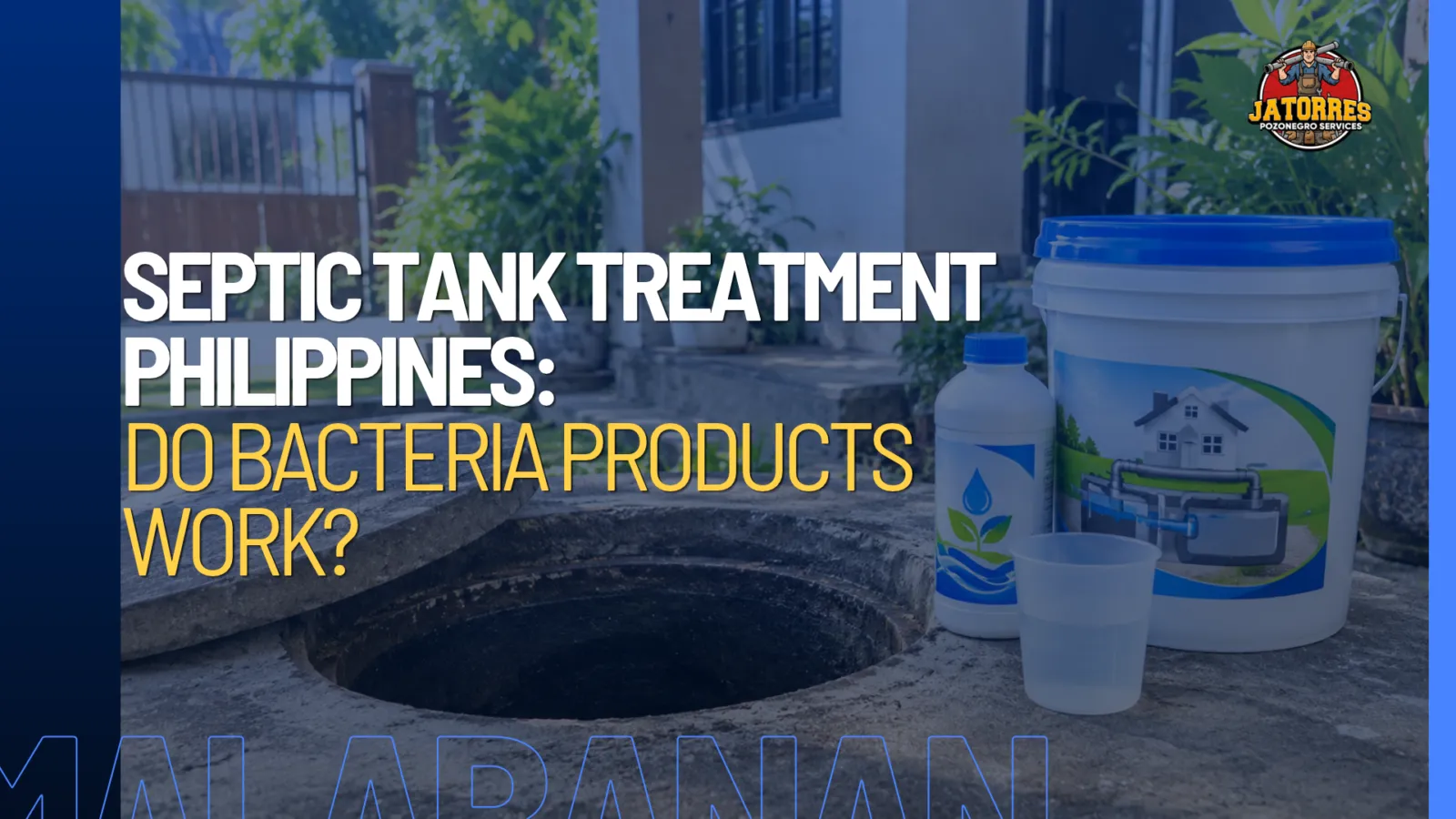
Septic tank treatment in the Philippines has become a popular online buy. Scroll through Shopee, Lazada, or TikTok Shop and you will find sachets, powders, tablets, and liquids that promise to “dissolve waste,” “remove odor in 24 hours,” or even “eliminate the need for siphoning.” Some hardware stores sell them beside the drain cleaners, and some sellers call them pampatunaw ng poso negro.
They look like an easy fix. Pour a sachet into the toilet once a month and never worry about your septic tank again. But do these products actually work? And can they really replace siphoning?
This guide explains what septic tank treatment products contain, what the research says about them, when they might help a little, when they can do harm, and what a Filipino household should do instead to keep its septic tank healthy.
Quick answer: Most septic tank treatment products in the Philippines are bacteria or enzyme mixes. A healthy septic tank already has the bacteria it needs, because human waste supplies them every day. University extension studies have found that additives make little or no difference to a working tank, and none of them can remove the sand, grit, and solid sludge that settle at the bottom. Only siphoning removes that. Skip harsh chemical products completely, and plan regular siphoning every 3 to 5 years instead.
What Is Septic Tank Treatment?
Septic tank treatment, also called a septic tank additive, cleaner, activator, or pampatunaw, is any product you pour or flush into your toilet or drains to change what happens inside the tank. In the Philippines, they usually come in three forms.
| Type | Common forms | What sellers claim | What it really does |
|---|---|---|---|
| Biological (bacteria and enzymes) | Powder sachets, tablets, liquid bottles | “Digests” waste, removes odor, prevents clogs | Adds microbes the tank already has; little measurable effect in a working tank |
| Chemical (acids, caustics, solvents) | Strong drain openers, “tunaw” liquids, muriatic acid | Melts clogs and sludge instantly | Can kill tank bacteria, damage pipes and concrete, and push sludge into the drainage |
| Home remedies | Yeast, sugar, buttermilk, vinegar and baking soda | Natural way to “feed” bacteria | Mostly harmless in small amounts, but does not replace siphoning |
The biological type is the one most homeowners buy online, so most of this guide focuses on it.
How Your Septic Tank Already Treats Itself
To understand why most septic tank treatment products add little, it helps to know how a septic tank works.
Every time someone uses the toilet, waste enters the tank along with billions of natural bacteria from the human gut. Those bacteria break down organic matter on their own. Inside the tank, the waste separates into three layers:
- Scum on top – fats, oils, grease, and light materials that float.
- Liquid (effluent) in the middle – the water that flows out to the drainage or sewer line.
- Sludge at the bottom – heavy solids that settle and slowly build up.
Bacteria digest part of the sludge and scum over time, but not all of it. Sand, grit, hair, tissue fibers, plastic, and other materials that do not break down keep piling up. That is why every septic tank eventually fills and needs to be emptied, no matter how “active” its bacteria are.
In short, your septic tank is already a living treatment system. As long as you don’t kill its bacteria with harsh chemicals, it restocks itself daily.
What the Research Says About Septic Tank Additives
Septic additives have been studied for decades, mostly by universities and environmental agencies in the United States, where many homes also use septic systems. The findings are remarkably consistent.
A fact sheet from Kansas State University Research and Extension notes that most research shows additives have no effect on wastewater systems, that some can harm the system or groundwater, and that additives are not needed to “restart” bacteria after a tank is pumped. A Montana extension fact sheet is even more direct: it calls biological and chemical additives unnecessary, a waste of money, and potentially harmful. Some U.S. states have gone as far as restricting or banning certain chemical additives.
The Philippine setting is different in some ways. Many homes have older or undersized tanks, no proper drainage field, and high water tables during the rainy season. But those differences make additives less useful, not more. An undersized or poorly built tank fills faster with solids, and no product can make it bigger or empty it.
So Do Septic Tank Treatment Products Work At All?
Here is a fair, honest summary of what bacteria and enzyme products can and cannot do.
What they might help with:
- Minor odor control in drains and the CR bowl, mostly because some products include fragrance or deodorizers.
- Recovery after heavy chemical use. If a household used a lot of bleach, muriatic acid, or antibacterial products and killed off tank bacteria, a biological product may help activity come back a bit faster. But simply stopping the harsh chemicals matters far more.
- Light grease in kitchen lines. Some enzyme products can soften small amounts of grease in pipes, though a grease trap and good habits do a much better job.
What they cannot do:
- Remove sand, grit, hair, plastic, wipes, or other materials that don’t biodegrade.
- Empty a full tank or lower the sludge level enough to delay siphoning by years.
- Fix a cracked tank, a broken pipe, a blocked outlet, or a missing drainage line.
- Stop backflow when the tank is already full.
- Replace siphoning. No product can.
The real risk is not the sachet itself. It is the false confidence it gives. Many households we visit have been pouring treatment products for years and believe their tank is fine, until it overflows. By then the sludge is hard, the outlet is clogged, and the job is bigger than it needed to be.
The Problem With “Pampatunaw” and Chemical Treatments
Chemical products deserve a stronger warning. Some sellers market harsh liquids as pampatunaw that “melt” sludge so you can skip siphoning. Others recommend pouring muriatic acid or caustic soda directly into the toilet.
These can cause real damage:
- They kill the bacteria your tank depends on, so solids build up even faster afterwards.
- They break up sludge without removing it. Loosened solids flow out with the liquid and clog the outlet pipe, drainage line, or soil around the tank.
- They corrode pipes, fittings, and concrete, especially older PVC joints and hollow-block tanks.
- They are dangerous to handle. Acid fumes in a small, enclosed CR can irritate your eyes and lungs, and mixing products can release toxic gases.
- They can pollute groundwater and canals that families nearby depend on.
If your toilet or drain is clogged, use a plunger first and call a professional for pipe declogging instead of pouring acid. For a full list of what should never go down your drains, read our guide on what not to flush or pour into your septic tank.
Signs Your Septic Tank Needs Siphoning, Not Another Sachet
If any of these signs show up, a treatment product won’t solve the problem. Your tank likely needs to be emptied.
- Toilets flush slowly or need two or three flushes.
- Gurgling sounds in drains, sinks, or the toilet.
- A strong sewage smell in the CR, garage, or around the manhole that keeps coming back.
- Water backing up into the shower or floor drain.
- Wet or soggy ground, or unusually green grass, over the tank area.
- No siphoning in the last 3 to 5 years, or you don’t know when it was last done.
We explain each of these in more detail in our guide to full septic tank signs. If odor is your main concern, see what that septic tank smell means and how to fix it.
Septic Tank Treatment vs. Siphoning: A Side-by-Side Comparison
| Factor | Treatment product | Professional siphoning |
|---|---|---|
| Removes sludge and solids | No, at most softens some organic matter | Yes, removes sludge, scum, and liquid |
| Removes sand, grit, plastics | No | Yes |
| Fixes backflow from a full tank | No | Yes |
| Restores bacteria | Rarely needed; tank restocks naturally | Bacteria return within days of normal use |
| Lets you inspect the tank | No | Yes, the crew can spot cracks or blocked pipes |
| How often | Usually sold as monthly | Every 3 to 5 years for most homes |
| Long-term cost | Small monthly cost that adds up | One planned job every few years |
If you are still unsure about the difference between the services, our post on septic tank cleaning vs. siphoning breaks it down.
What Actually Keeps a Septic Tank Healthy
The best septic tank treatment in the Philippines is not a product. It is a set of simple habits plus regular professional service.
1. Siphon on schedule. Most households should siphon every 3 to 5 years, sooner if the tank is small or many people live in the house. Use our guide on how often to siphon a septic tank to estimate your schedule, or ask about a preventive maintenance plan so you don’t have to track it yourself.
2. Flush only waste and toilet paper. Wipes, pads, diapers, cotton buds, cigarette butts, and plastic should go in the trash.
3. Keep grease out of the drains. Pour used cooking oil into a sealed container and throw it away. Food businesses should keep their grease traps clean; see our guide to grease trap cleaning for Metro Manila restaurants.
4. Go easy on harsh cleaners. Normal amounts of household cleaners are fine. Gallons of bleach, muriatic acid, or caustic drain openers are not.
5. Spread out water use. Avoid doing all the laundry in one day. Fix leaking faucets and running toilets that send water into the tank all day long.
6. Protect the tank area. Don’t park heavy vehicles over the tank or build permanent structures over the manhole. Make sure the crew can reach it easily.
7. Know where your tank is. Keep a note of the manhole location and the date of the last siphoning. If your tank is hard to reach, damaged, or too small for your household, consider upgrading it with proper septic tank construction.
Skipping these steps for years leads to bigger problems. Read what happens if you don’t clean your septic tank and the common septic tank problems in the Philippines to see what is at stake.
6 Common Myths About Septic Tank Treatment in the Philippines
We hear these on almost every job. Here is the truth behind each one.
Myth 1: “If I use bacteria every month, I’ll never need to siphon.” Bacteria can only digest organic matter, and even that happens slowly. Sand, grit, hair, fibers, and plastics stay in the tank forever until a truck removes them. Every septic tank fills up eventually.
Myth 2: “The tank has no smell, so it must be fine.” Many treatment products contain fragrance that hides odor near the drains. A tank can be close to full with no strong smell, especially if the manhole is sealed well. Smell is a late warning sign, not an early one.
Myth 3: “Pour yeast or sugar to feed the bacteria.” This is an old lola remedy. A small amount does no harm, but it does nothing useful either. Your household already feeds the tank every day.
Myth 4: “Muriatic acid cleans the septic tank.” Acid cleans tiles and toilet bowls, not tanks. Poured into the system, it kills good bacteria and damages pipes and concrete. Keep it for surface cleaning only, and use it sparingly.
Myth 5: “Our tank has no bottom, so it never fills.” Many older Filipino homes have tanks with an open or porous bottom so liquid seeps into the soil. Solids still collect, and the soil around the tank clogs over time. When that happens, the tank backs up, and it can also contaminate groundwater nearby.
Myth 6: “Siphoning once is enough for many years.” How long a tank lasts between siphoning depends on its size, the number of people in the house, and how it is used. A small tank serving a big family may need service every two years. Keep a record of each job so you know when the next one is due.
If any of these myths sound familiar, it may be time to have your tank checked. A siphoning crew can tell you how full it is, what condition it is in, and how soon you will need the next service.
Should You Ever Use a Septic Tank Treatment Product?
If you still want to use one, here is a practical way to decide.
- Your tank is healthy and recently siphoned: you don’t need it. Save your money.
- You used a lot of strong chemicals recently: stop the chemicals first. A mild biological product is unlikely to hurt, but give the tank time to recover on its own.
- You have odor or slow drains: have the tank checked or siphoned. The product will only mask the symptom.
- You were told a product means “no more siphoning”: that claim is false. Every septic tank needs emptying eventually.
If you do buy one, choose a biological product (bacteria or enzymes) rather than a chemical one, follow the label, and never use it as a reason to delay siphoning.
How Much Does Siphoning Cost Compared to Monthly Treatments?
Monthly treatment sachets look cheap, but they add up over three to five years, and you will still need to siphon at the end. A planned siphoning job is a one-time cost that actually removes the waste. It is also far cheaper than an emergency cleanup after an overflow.
The price of siphoning depends on your tank size, location, access, and the condition of the sludge. For a full breakdown, read our guide to the siphoning price in Metro Manila, or message us with a photo of your manhole for a quick quote. Watch out for very low online offers; read how to spot a legit Malabanan before you pay any deposit.
Frequently Asked Questions
Does septic tank treatment in the Philippines really work?
Most septic tank treatment products are bacteria or enzyme mixes, and research shows they make little or no difference in a healthy, working tank. They cannot remove sand, grit, or solid sludge, so they do not replace siphoning.
Can septic tank bacteria products replace siphoning?
No. Bacteria break down only part of the organic waste. Non-biodegradable solids keep building up at the bottom of the tank, and only siphoning removes them. Plan siphoning every 3 to 5 years for most homes.
Is muriatic acid safe to pour into a septic tank?
No. Muriatic acid and other harsh chemicals kill the tank’s natural bacteria, corrode pipes and concrete, release dangerous fumes, and can push loosened sludge into your drainage. Use a plunger or call a declogging professional instead.
Do I need to add bacteria after my septic tank is siphoned?
No. Your tank restocks its bacteria naturally from normal toilet use within days. University extension research has found that additives are not needed to restart a tank after it is pumped.
What is the best natural septic tank treatment?
The best “treatment” is good habits: flush only waste and toilet paper, keep grease out of drains, avoid harsh chemicals, spread out water use, and siphon on schedule.
Where can I get septic tank siphoning near me?
JA Torres Malabanan Siphoning serves all of Metro Manila, including Caloocan, Quezon City, and Pasig, plus provinces such as Cavite, Iloilo City, and Tacloban. See the full list on our Areas We Cover page.
Skip the Guesswork: Book Professional Siphoning
A sachet can’t empty your septic tank. Our crew can. JA Torres Malabanan Siphoning provides septic tank siphoning, septic tank cleaning, and preventive maintenance for homes and businesses, 24/7, across Metro Manila and 48 cities and provinces nationwide. Read our client feedback to see what customers say.
Call or message us for a quote:
- Viber / main hotline: 0995-357-0018
- Globe: 0917-781-2585 · 0927-621-3352 · 0916-714-4772
- Smart: 0928-684-5511
- TNT: 0912-745-5325
Address: Blk 5, Bankers Village, 10 M Victoria St, Barangay 167, Caloocan, Metro Manila 1426
Contact us here or message us on Facebook.